Use age bands as a starting point, then adjust for ability, experience and supervision. Show the task, do it together, and hand over a small, clear part before expecting independence.
Match the task to the skill
These are household ideas, not developmental milestones. Adapt the equipment, instructions and level of help to your child.
| Stage | Jobs to try together | What an adult can do |
|---|---|---|
| Preschool | Put toys in a basket; place napkins; pair socks | Use one-step instructions and stay nearby |
| Early school years | Pack a bag from a picture list; water a plant; clear a place setting | Show the finish line and check together |
| Older school years | Sort laundry; put away groceries; help prepare simple food | Teach the sequence and supervise as needed |
| Teen years | Own a laundry cycle; plan a meal; manage a recurring shared task | Agree the standard, supplies and schedule |
Teach the whole sequence
A child may understand “put the plates out” without knowing where the clean plates live, how many people are eating, or what to do when the dishwasher has not run. Walk through the real task once. Let them ask the questions that make it repeatable.
For anything involving heat, sharp tools, heavy items or cleaning products, choose suitable supervision and alternatives. A child can contribute without handling every part of the job.
Make the finish line visible
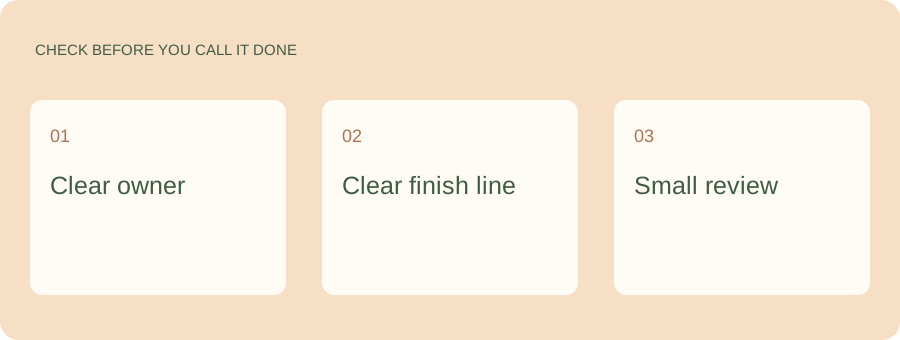
“Tidy the hallway” can mean something different to everyone. “Shoes on the rack and bags on hooks” is easier to see. A photo of the finished space or a small drawing can help a child check their own work without another verbal reminder.
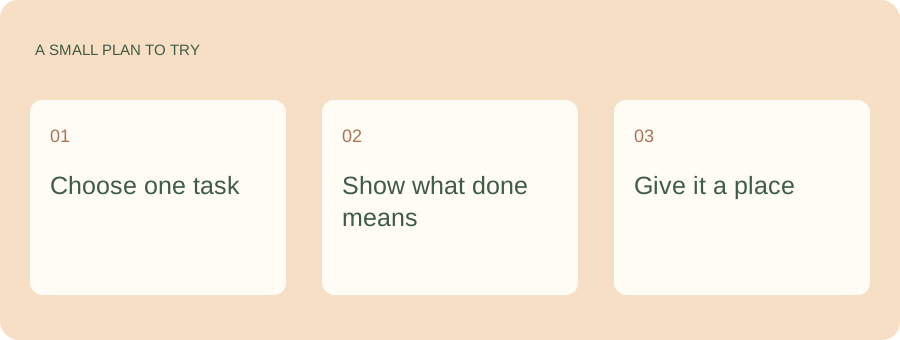
Turn the chore ideas into your family’s routine.
Choosing a suitable job is the first step. Kaia can help you organize the routine and rewards around it, so a useful idea has somewhere to live after you close this guide.
Hand over one part at a time
For a school bag, begin with putting the lunchbox inside. Later add the water bottle and reading folder. Keep the sequence in the same place so remembering is not an extra hidden task.
When a new job is taking longer than expected, make it smaller before adding more reminders. Learning and remembering are different challenges; a child may need support with either.
Choose a routine the family can keep
Attach a task to something that already happens: clearing a place after dinner, sorting clothes before bath time, checking tomorrow’s bag after reading. Start with one reliable moment. Three carefully chosen tasks can be more useful than a long list that disappears after Monday.
Review for fit, not perfection
After a week, ask what felt easy and what needed help. Keep the successful parts. If a task becomes a daily battle, change the timing, instruction or size before assuming the child is refusing to contribute. Family jobs should gradually become ordinary, not a nightly performance review.
See a worked family example
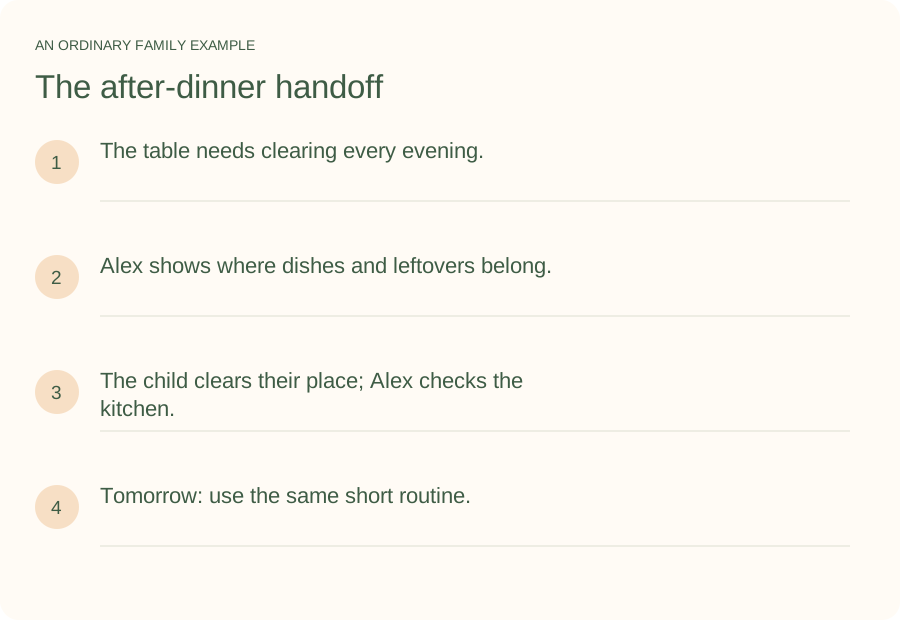
Illustrative household example; adapt the names and details to your week.
A few common questions
At what age should children start chores?
Children can often join simple household activities early with close adult help. Choose a small task suited to the individual child. Age alone does not tell you whether a task is safe or manageable.
Should siblings have the same chores?
They can contribute differently. Match jobs to ability, available time and what each child is learning. Explain the shared expectation without insisting every chart look identical.