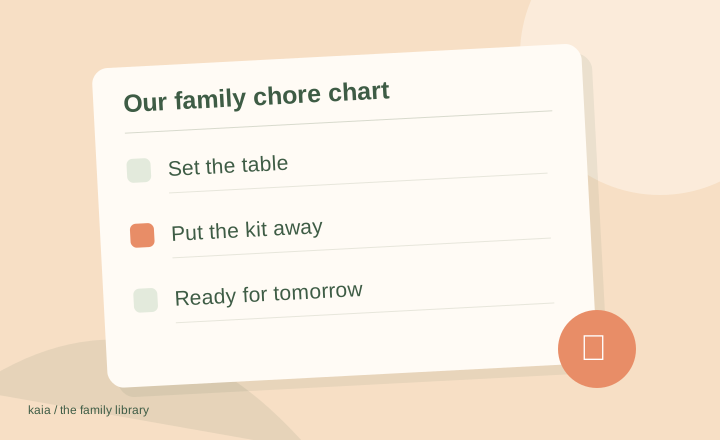
Start with three to five recurring jobs, give each one a named owner, and describe what finished looks like. Print the chart where the work happens and check it together after the first week.
Choose the jobs that cause the most reminders
Start with the jobs you find yourself repeating aloud. Shoes away, lunchbox emptied, table cleared. Add only the ones your family can practice consistently this week. You can make the chart bigger later; it is harder to make an overwhelming first week smaller.
Separate an everyday routine from an occasional project. “Put dirty clothes in the basket” belongs on a daily chart. “Sort everything that no longer fits” probably needs a date and an adult.
Make a job easy to understand
Replace broad labels with something a person can see and finish.
| Instead of… | Write… |
|---|---|
| Clean your room | Put books on the shelf and clothes in the basket |
| Help with dinner | Put plates and cups on the table |
| Tidy the kitchen | Clear the table and wipe it |
| Do the bins | Empty the small bins into the main bin |
Give each job an owner and a time
A row that says “everyone” can quietly become nobody’s job. Put one name beside the task, even when someone else helps. Choose a natural cue: after breakfast, before screens, after dinner. A routine cue is often easier to remember than a clock time.
For younger children, do the job together first. A chart records the agreement; it cannot teach the whole skill by itself. Keep the first version small enough that showing someone how does not take over the evening.
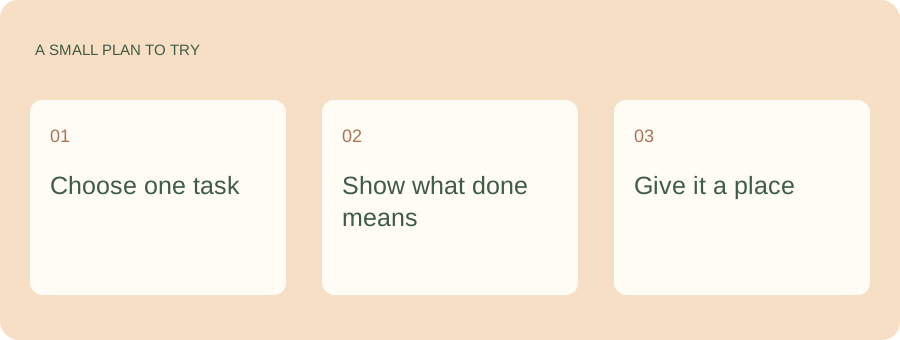
The chart is ready. Let Kaia help with the follow-through.
Print the chart for a visible plan. For the reminders and recurring routine, bring the jobs into Kaia. Her chores and rewards tools give children something to work toward without making you the family notification system.
Use the printable or edit your own
The family chore kit includes task, owner, finish line and a weekly check-off grid. Edit the example rows, print it, and leave space for changes. For adults who share a home, use the adult version linked below; it includes an agreed standard and backup owner.
Check the chart without turning it into a scoreboard
At the end of the week, ask which task was confusing, badly timed or too large. A missed square is information. Maybe the task needs a smaller first step, or maybe the person assigned it was out every evening.
If you use rewards, agree on them before the week starts and keep them simple. You should not need a second chart to administer the first one.
Let the chart change with the household
Rotate a job when someone is ready to learn it, not simply because a new week has begun. Keep useful routines steady. When school hours or work shifts change, revisit the plan together instead of expecting the old chart to stretch around everything.
See a worked family example
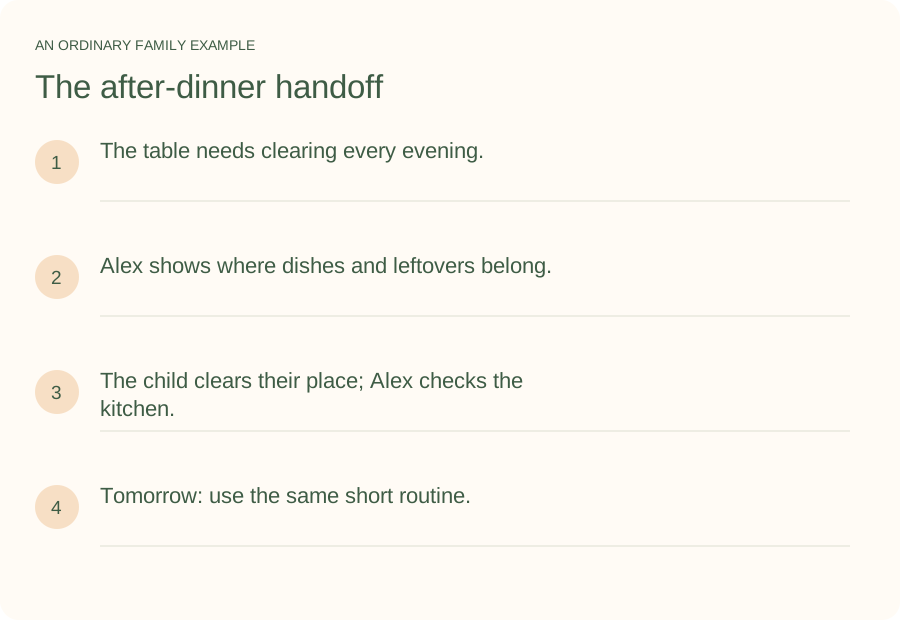
Illustrative household example; adapt the names and details to your week.
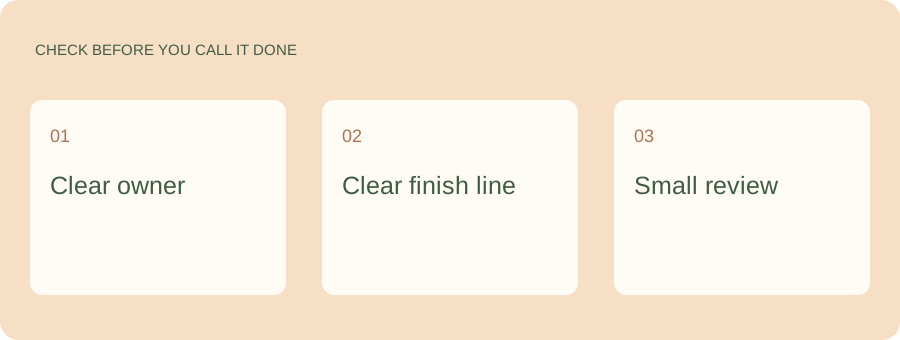
A few common questions
How many chores should go on a chart?
Start with three to five jobs across the first chart, or fewer when a child is learning a routine. Add tasks when the current version is easy to understand and use. There is no universal number every family needs.
Should a chore chart include rewards?
It can, but it does not have to. Decide which responsibilities are part of shared family life and whether there are extra jobs you want to reward. Keep the agreement understandable before tracking points.
Can I print a blank chart?
Yes. Open the editable family chore kit, replace or clear the example rows, and print it. A ready-to-print PDF is available too.