Assign ownership of a complete task, agree what done means, and make supplies and timing part of the agreement. Review the workload around each person’s actual capacity, rather than counting rows.
List the work before dividing it
Take a normal week and list the recurring jobs: food, dishes, laundry, rubbish, bathroom, floors and household supplies. Include the preparation and follow-up. Buying detergent and noticing it is running low belong to laundry, not to a mysterious separate household manager.
Then add the less frequent work that is easy to forget: changing bedding, replacing filters, cleaning the fridge or arranging repairs. Put a date or trigger beside it.
Agree what each person is taking on
A useful chart makes ownership concrete.
| Job | Complete ownership includes |
|---|---|
| Laundry | Notice the load, wash, dry and put it away |
| Dinner | Choose the meal, check ingredients and arrange preparation |
| Rubbish | Know collection day, empty bins and replace liners |
| Bathroom | Have supplies ready and agree which surfaces are included |
A filled adult chore chart for an ordinary week
Illustrative two-adult household: Alex has late shifts on Tuesday and Thursday; Sam is out early on Wednesday. Their chart shares complete jobs, with a backup agreed before the busy part of the week. Change the names and the split to suit your home.
| Job | Owner | When or trigger | What done means | Backup |
|---|---|---|---|---|
| Dinner | Alex on Monday, Wednesday and Friday; Sam on Tuesday and Thursday | Check the next evening before shopping | Meal decided, ingredients checked, cooking and cleanup agreed | Owner asks for cover before the afternoon |
| Laundry | Sam | Wednesday and Sunday; sooner if kit is needed | Wash, dry, put away and check detergent | Alex covers a load when agreed |
| Bins | Alex | Evening before collection | Bins emptied, correct bin out, liners replaced | Sam if Alex is away |
| Bathroom | Sam | Weekend check-in | Agreed surfaces cleaned and supplies restocked | Swap a comparable job that week |
| School bags | Alex | Evening before school | Notice checked, required kit packed, missing item raised | Sam on the late-shift nights |
Discuss standards once, while nobody is holding a sponge
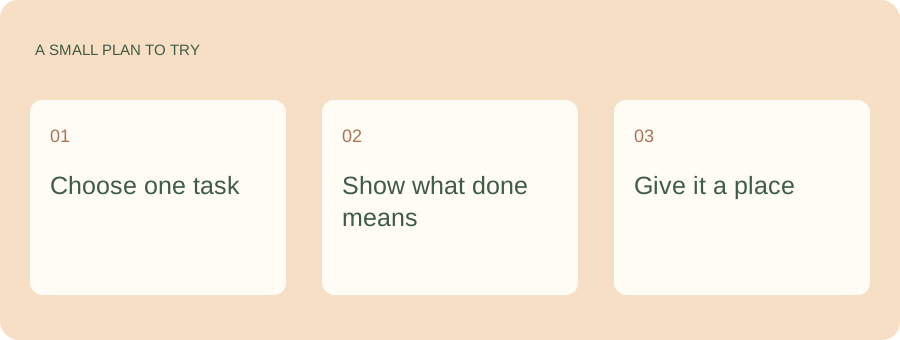
“Clean enough” can become an argument every time a task is done. Agree on a short observable finish line. For the kitchen, that might mean dishes dealt with, worktop wiped and food put away. Keep it proportionate to the home you live in.
If one person wants a different standard, talk about the extra work involved. Quietly redoing someone’s job does not make the agreement clearer.
Share the remembering along with the chores.
A fair chart should not leave one adult chasing every box. Put the household jobs and handoffs into the family conversation with Kaia, so the plan is shared instead of living in one person’s head.
Balance capacity, not the number of boxes
A daily dinner responsibility is not automatically equal to one weekly bin collection. Consider frequency, time, planning and the week each person is having. Work shifts, caring responsibilities and health can change capacity. The chart should make those conversations easier, not replace them.
Use a backup without handing the ownership back
Write a backup beside time-sensitive jobs. If the owner cannot do pickup or make dinner, they arrange the handoff early enough for the other person to plan. “Can you cover Tuesday? I have the ingredients ready” is a different handoff from discovering there is no plan at six.
For roommates, include shared spaces, guests and restocking. Keep private-room preferences out of the shared chart unless they affect everyone.
Hold a ten-minute reset
Use the editable adult chart for two weeks, then ask what was missed and what was heavier than expected. Change the agreement together. The aim is a home that runs without one person constantly assigning work.
See a worked family example
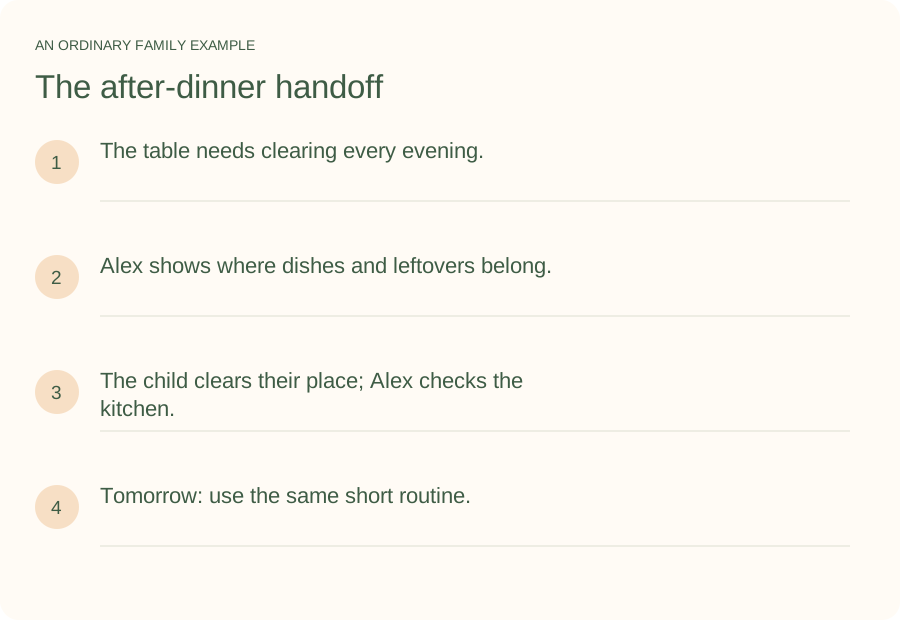
Illustrative household example; adapt the names and details to your week.
A few common questions
Should couples split chores fifty-fifty?
Equal numbers of chores do not necessarily mean a fair workload. Consider time, effort, planning and available capacity. Choose an arrangement both people understand and can revisit.
How do we stop one person managing the chart?
Give each task owner responsibility for noticing and updating their own work. Use a short shared check-in rather than asking one adult to chase every row.