Group household chores by frequency and area, choose the jobs that matter in your home, and assign an owner and finish line. Keep occasional maintenance separate from the daily routine.
Start with the recurring work
Use this as an inventory to edit, not a list every household must complete on this schedule.
| Area | Often recurring | Less frequent |
|---|---|---|
| Kitchen | Dishes, food put away, surfaces used for preparation | Fridge check, cupboards, appliance care |
| Laundry | Sort, wash, dry, put away | Bedding, outgrown clothes, repairs |
| Bathroom | Keep essentials available and used areas usable | A fuller clean, towel rotation |
| Shared rooms | Put shared items away, manage spills | Floors, dusting, storage review |
| Household supplies | Notice and replace essentials | Stock check, maintenance planning |
Decide what matters this week
A household with a baby, a night shift or a difficult week may need a shorter list. Mark essentials, useful extras and things that can wait. That makes postponing a conscious choice rather than a feeling that everything is being neglected.
Choose a frequency that fits your household’s use and needs. This list is an organizing tool, not a hygiene standard.
Make the invisible step part of the row
If somebody owns cleaning the bathroom but somebody else must notice every time the supplies run out, the task is still split in a way the chart may hide. Include checking supplies, arranging time and dealing with the result. Keep the row readable by putting the details in a short note.
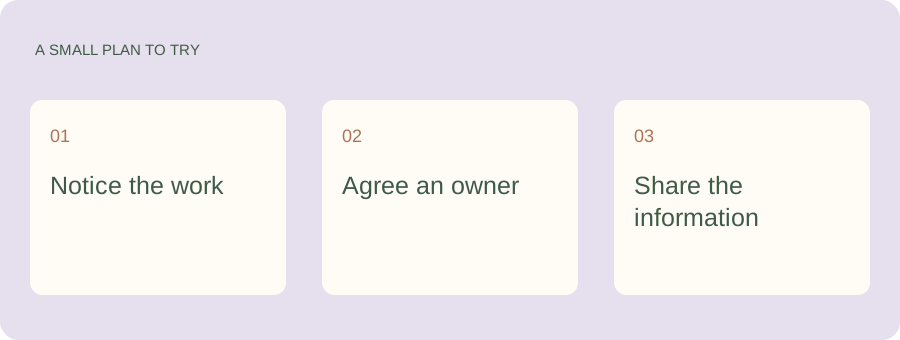
Turn the long list into this week’s plan.
You do not need every household job on the calendar at once. Ask Kaia to help turn the essentials into a manageable routine with clear owners and reminders. The list becomes something your family can act on.
Give large jobs a boundary
“Sort the garage” can stay on a list forever. “Clear the shelf beside the door for school bags” is a job with an end. For larger projects, list the first useful step and give it a time rather than mixing it among five-minute daily jobs.
A clear finish line also helps when children join in. They can own a smaller part without being expected to interpret an entire room.
Choose one owner and a backup
Use the adult chore kit to assign complete responsibilities. Put the regular owner first and a backup for the time-sensitive jobs. A shared responsibility still needs a clear way to decide who acts today.
Keep the inventory, simplify the weekly chart
The full list can stay as a reference. Move only this week’s jobs onto the visible chart so it remains readable. Review the inventory when routines change, and stop tracking tasks that have become easy habits unless the record still helps.
See a worked family example
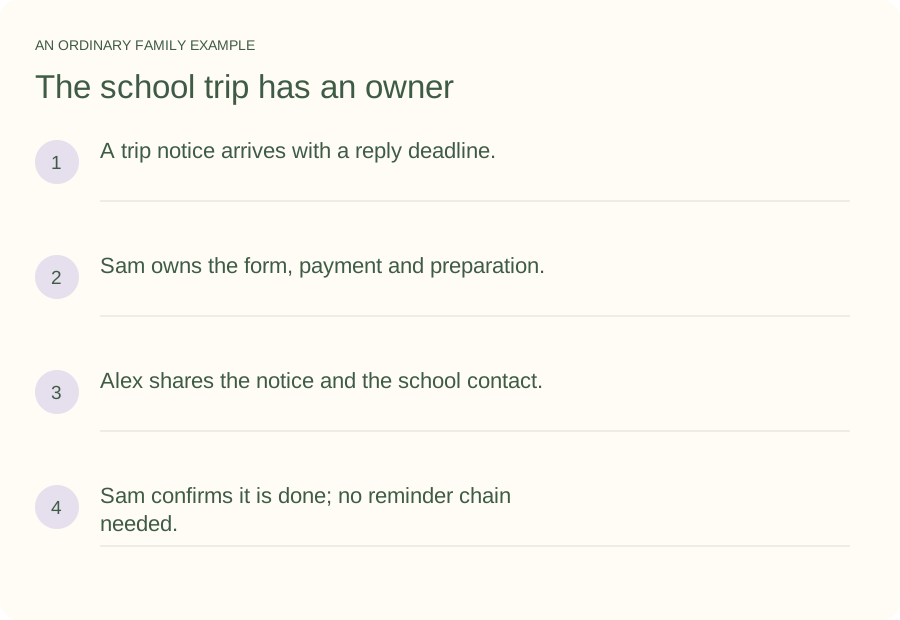
Illustrative household example; adapt the names and details to your week.
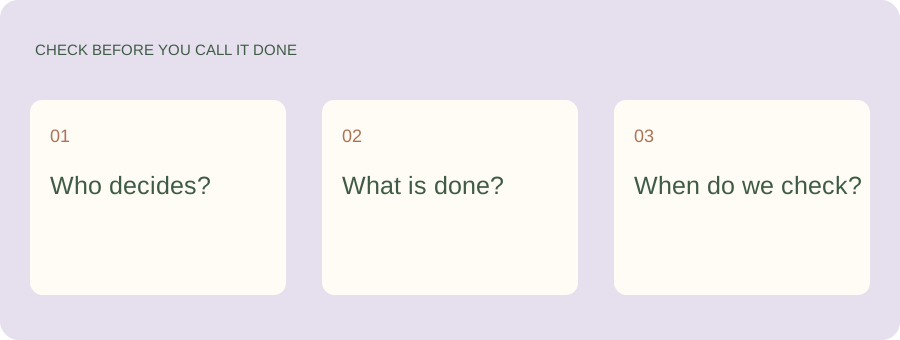
A few common questions
How do I decide what is daily or weekly?
Base it on use, household needs and available capacity. The categories here are starting points. Choose the frequency deliberately and adjust when the routine is not working.
Should every chore be on the visible chart?
No. Keep a complete inventory elsewhere and show only the jobs people need to act on now. A crowded chart can hide the important work.