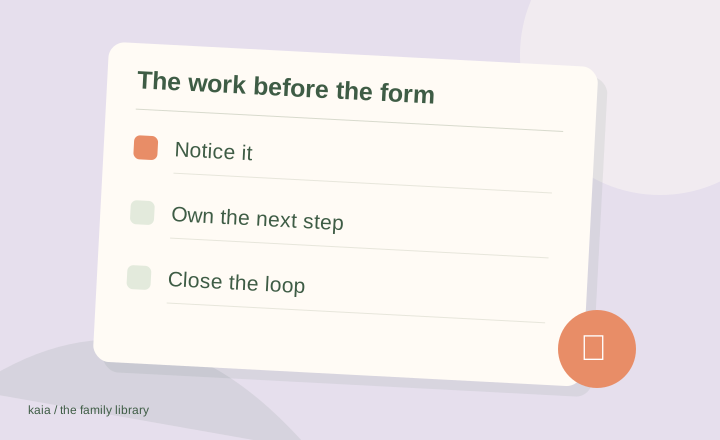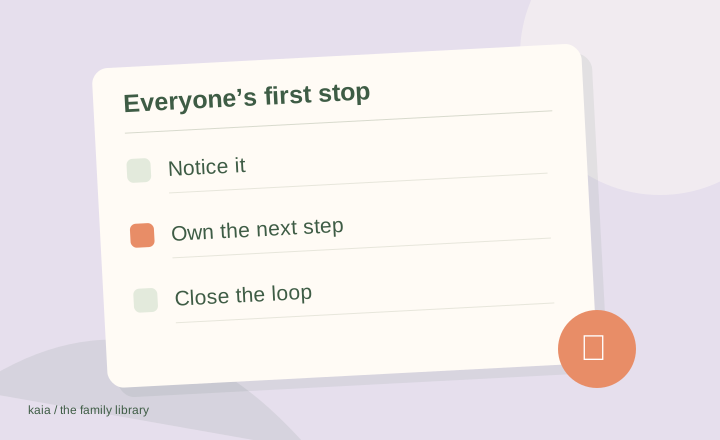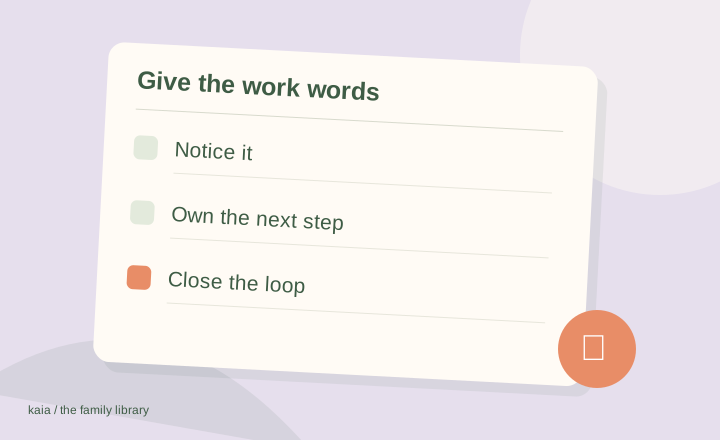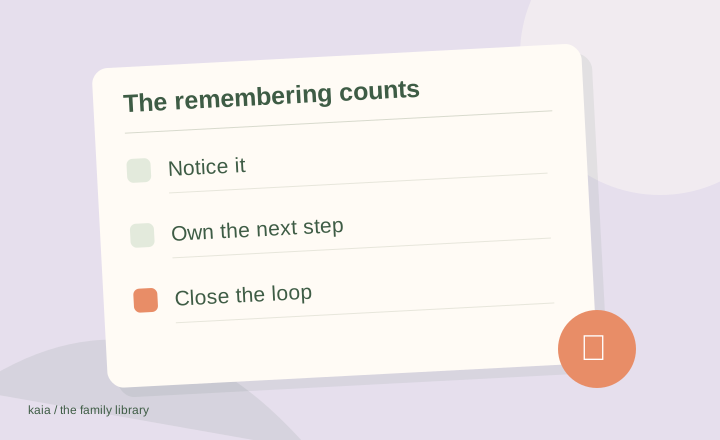
List the noticing, planning, doing and follow-up behind recurring family tasks. Use the checklist as a conversation starter, then choose a few complete responsibilities to share. It is not a test or a score of who cares more.
Look behind the finished task
Choose familiar areas of family life and write the steps that happen before and after the visible action.
| Area | Work that can stay invisible |
|---|---|
| School | Read notices, identify dates, arrange permission and preparation |
| Food | Notice what is low, choose meals, coordinate shopping and changes |
| Clothes | Notice fit, track the kit day, wash what will be needed |
| Appointments | Know what is due, book, arrange transport and follow up |
| Family occasions | Remember dates, coordinate replies, prepare what is needed |
Fill it in separately, then compare
Give each adult a copy of the same worksheet. List what you notice and hold in mind, including tasks that rarely make it onto a calendar. Then compare at a quiet moment. The purpose is to discover work, not to catch someone failing a quiz.
Leave space for paid work, care outside the household and changing capacity. A fair arrangement is easier to discuss when the whole week is visible.
Separate knowing from owning
Someone can help with a task without carrying responsibility for it. If one adult still has to remember, assign and check every step, the management work has stayed with them. Decide which responsibilities can move as a complete piece, including knowing when they next need attention.
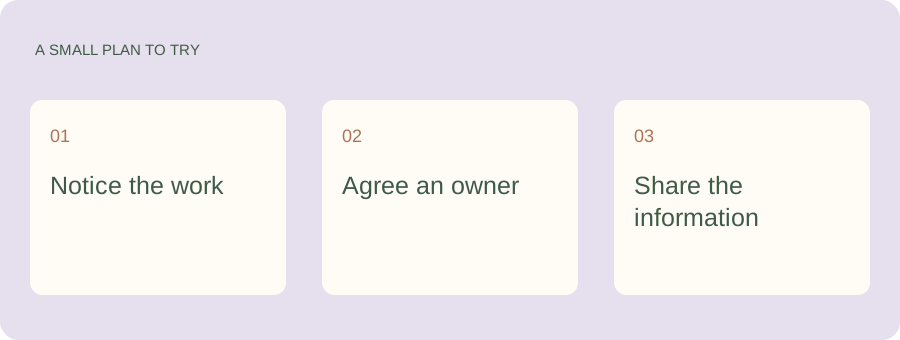
Once the work is visible, use an adult chore chart to give each recurring job an owner, a finish line and a backup.
Stop keeping the whole household in your head.
The checklist makes the work visible. Kaia helps you do something with it: share the dates, preferences, reminders and tiny details in the family conversation, where everyone can ask her instead of asking you.
Choose three changes you can try
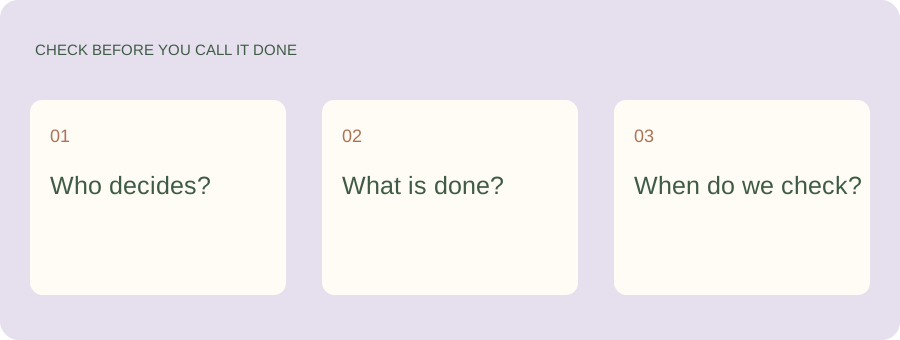
Do not try to renegotiate the whole household in one sitting. Pick three recurring jobs and agree an owner, a finish line and a way to communicate changes. Examples: the school inbox for one child, weekday lunches, or the next round of appointments.
If you want a framework for sharing the planning as well as the doing, try our Fair Play method guide with a worked dinner handoff.
Give the new owner the information
Ownership works better when the person has access to the calendar, contact details, account or supplies they need. Make the handoff once, then give them room to use a workable method of their own.
Keep a short shared note about exceptions rather than requiring one adult to remain the living reference manual. If a task affects another person’s time, agree when they need to hear about it.
Come back to the agreement
Use a short family check-in to ask what became easier and what still got passed back. The worksheet is a working document. Changes in work, school and care can all mean it needs a new version. Kaia’s role in this picture is household coordination; the agreement about responsibility still belongs to you.
A filled example: the birthday invitation
The visible job is attending the party. The less visible sequence is replying, checking the location and timing, arranging transport, choosing a present and making sure it leaves the house. Your checklist can capture that as one responsibility with a clear boundary.
Example row: “Saturday party | Reply and plan transport/present | Alex | Reply Tuesday; confirm pickup Thursday.” Share the invitation once. Alex owns the open questions and tells the other adult about anything affecting their time.
See a worked family example
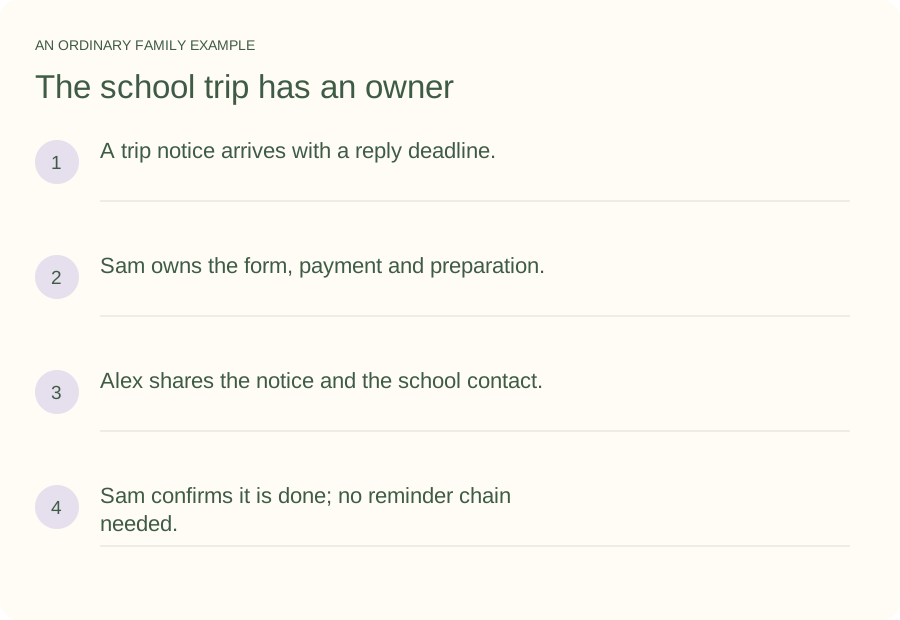
Illustrative household example; adapt the names and details to your week.
A few common questions
Is mental load the same as doing more chores?
Not exactly. This checklist focuses on the noticing, planning and follow-up around tasks, as well as the tasks themselves. Both kinds of work matter in a household conversation.
Can I use this alone?
Yes. It can help you see what you are carrying and choose what to simplify, stop or ask for help with. You do not need a two-adult household to benefit from making recurring work visible.
Does the checklist give us a fairness score?
No. The worksheet helps surface responsibilities and make agreements. It is not a validated assessment or a reliable way to measure one person’s contribution against another’s.