A caregiver handoff should state who is responsible, when and where the handoff happens, what the child needs and how to reach the right adult. Share only the relevant details, confirm changes with the people involved and keep recurring instructions easy to find.
Write for the person who is doing this today
A regular helper needs the changes. A new babysitter needs more context. Separate the standing details from today’s plan so neither person has to hunt through a long message.
| Standing detail | Today’s change |
|---|---|
| Usual pickup entrance | Use the main office today |
| Parent contact numbers | Alex is available during the afternoon |
| Where the activity bag lives | The bag needs to travel to the other home |
| Agreed evening routine | Dinner is already prepared tonight |
Before pickup: settle time, place and responsibility
Include the full date, collection time and exact meeting point. Agree who handles any school authorization required for a different adult to collect. Ask the helper to confirm they can do it; an unanswered message is not a completed arrangement.
For a change, say what replaces the old plan. “Thursday pickup is now 2:00 at the main office; Grandma is collecting” is clearer than “It’s earlier this week.”
Give the useful context without handing over a manual
Share relevant care instructions directly, including any essential information the caregiver needs. Keep private documents and unrelated family conversations out of a general handoff. The worksheet is for coordination, not a substitute for detailed care instructions.
For recurring help, agree where current details live. A helper should be able to find the pickup plan without repeatedly asking the same parent to resend it.
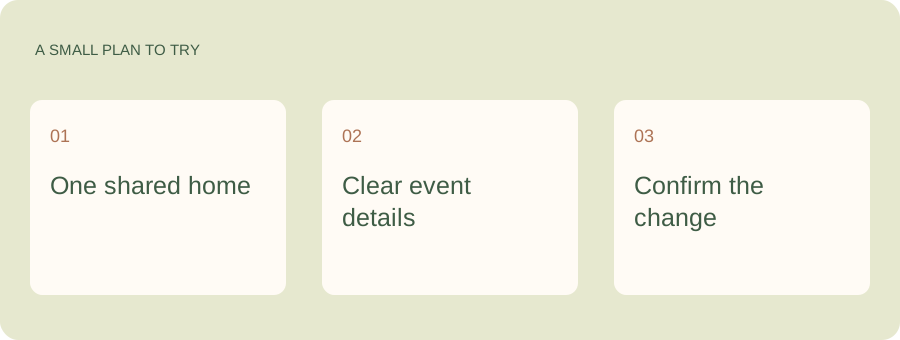
Keep the handoff easy to find
Bring the plan to Kaia so you can organize the dates and details before sharing the relevant instructions with your helper.
When grandparents help regularly
Talk about which decisions are already settled and where the caregiver has flexibility. A clear routine can coexist with someone else doing things a little differently. The goal is useful support and a comfortable handoff.
If the plan changes, notify the person actually helping that day. Updating a calendar that they never check will not do the job. Use a channel they are comfortable with and confirm important changes.
Close the handoff with the next adult in mind
At collection or return, pass on anything that affects the next step: the bag stayed at school, tomorrow’s kit changed, or a form came home. Keep the message short and actionable.
Use the editable caregiver checklist for a repeatable starting point. Bring the relevant dates and arrangements to Kaia to help organize them in the family conversation; share caregiver details only with the people who need them.
See a worked family example
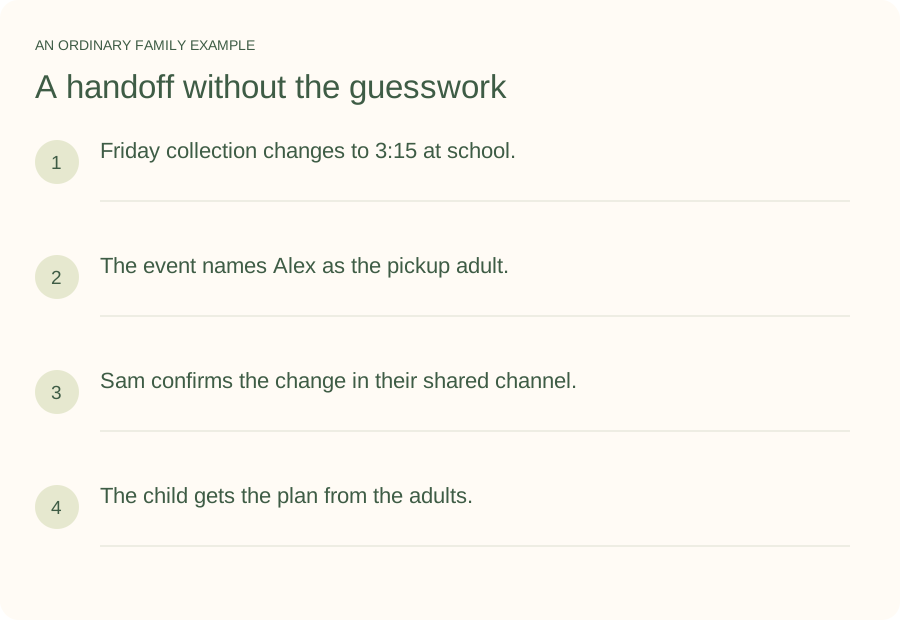
Illustrative household example; adapt the names and details to your week.
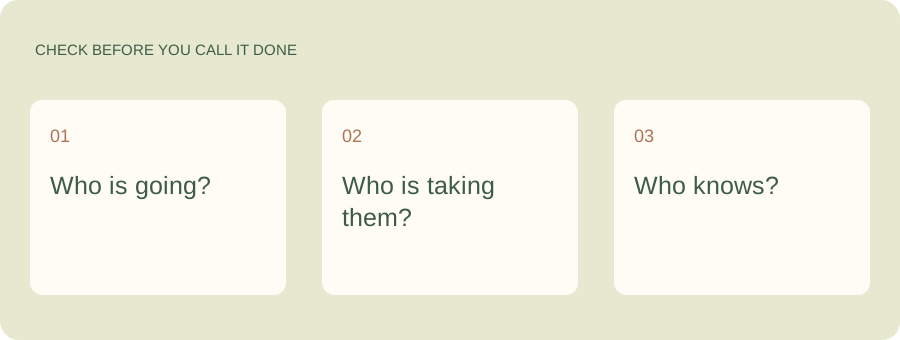
A few common questions
What should I put on a babysitter checklist?
Include the date and times, responsible adults and contacts, relevant routine, where needed items are kept and any essential care instructions provided directly. Confirm what the babysitter needs for this visit rather than copying every household detail.
How do I avoid rewriting instructions every time?
Keep stable information in one place, date the current plan and highlight changes. Review it when routines or contact details change. The editable handoff worksheet gives you a reusable structure.