Keep the shared calendar focused on the child’s schedule and the agreed handoffs. Record times, places and responsibilities clearly, separate proposed changes from confirmed plans, and use the communication arrangement that works for your situation.
Decide what belongs in the shared plan
Include school events, activities, appointments and handoffs that both adults need to coordinate. Keep unrelated personal details outside the shared view. The goal is enough information to support the child’s routine without making every part of either household visible.
Our experience as co-parents informs our focus on clear handoffs and continuity between homes. Families have different arrangements; use this guide as practical organization, not legal advice.
Write the handoff so it can stand on its own
An event should not depend on a child carrying the explanation.
| Detail | Example |
|---|---|
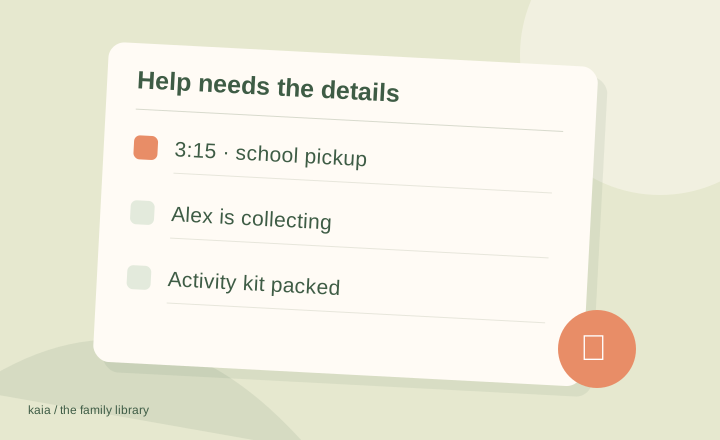
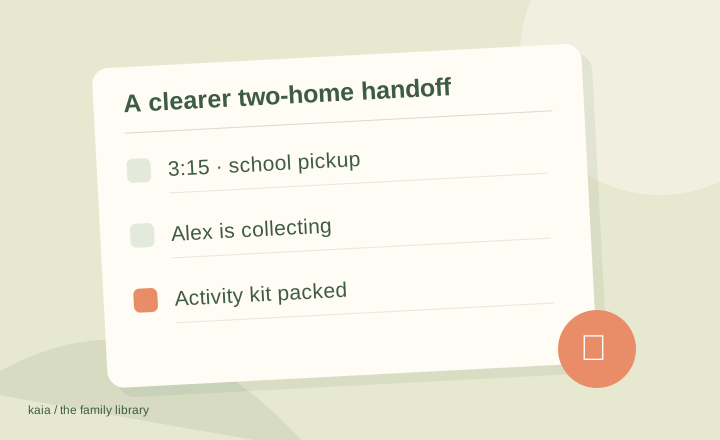
| When | Friday, 3:15 pm |
| Where | School’s usual pickup point |
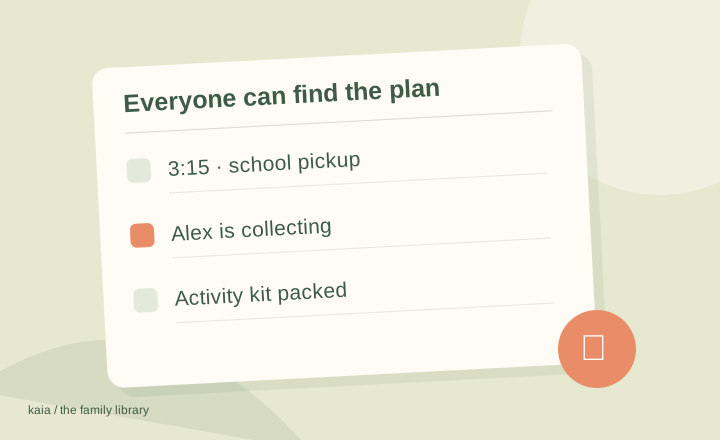
| Who | Alex collects; Sam has confirmed |
| What travels | School bag and activity kit |
| What changes next | Saturday activity starts at 10, not 9 |
Separate a request from an agreement
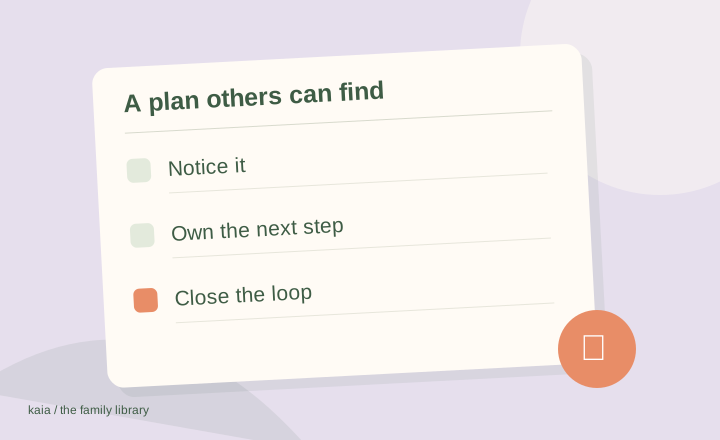
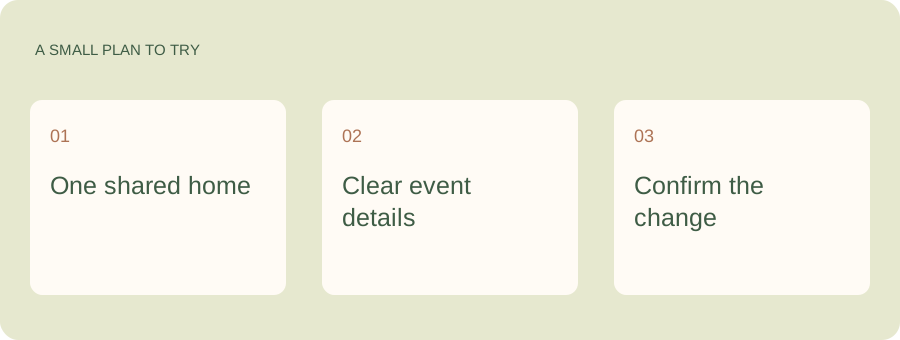
A proposed swap is not automatically a changed plan. Use your agreed communication method to request and confirm the change, then update the calendar. A calendar can record the result; it should not silently turn one person’s proposal into a commitment for another.
Make the next handoff easier to explain.
Kaia can help organize the practical details around a family schedule. Start with a clear pickup plan and the information both adults need, keeping sensitive conversations in the appropriate private channel.
Keep school information accessible
Agree how official notices reach each relevant adult and who handles the resulting action. If an event requires permission, payment or equipment, give that work an owner. Seeing the same notice does not necessarily settle who is responding to it.
Support routines without making both homes identical
You can share information about kit, school deadlines and the next day’s requirements while each home keeps its own routines. A short preparation list can help a child arrive ready without asking them to manage the adults’ coordination.
Use reminders for the adult who can act. The night before a handoff may be a better time to check the bag than a notification at the pickup time.
Choose the right communication boundaries
Use any existing agreed or required co-parenting communication process. If a specialist platform or professional guidance is part of your arrangement, build the calendar routine around it. This guide does not replace those agreements. The useful result is a clearer plan and fewer practical questions left with the child.
Co-parenting shouldn’t mean explaining the week twice
We built Kaia with the everyday work of co-parenting in mind. A useful handoff makes the current plan clear without requiring either adult to reconstruct a conversation.
Try this weekly note: “Friday: Alex collects at school, 3:15. Reading book and activity bag travel with Jamie. Sam confirms Sunday return by Thursday evening. The school form still needs a reply; Alex owns it.” This is an illustrative example, not a personal account. Keep the child out of the role of passing scheduling messages between adults.
A co-parent's reason for building Kaia
We are parents and co-parents ourselves. Keeping the adults coordinated should help protect children’s routines, without adding another app or device for everyone to manage.
For your next handoff, make four details easy to find: the current time, the place, the adult responsible and what needs to travel with the child. Keep disagreements in a separate adult conversation. The shared plan should tell each person what happens next.
See a worked family example
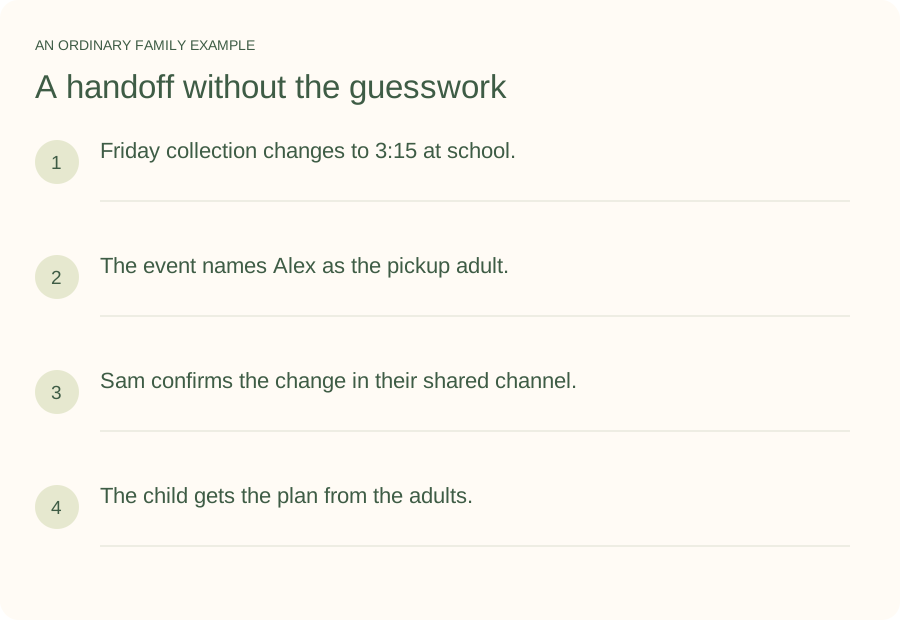
Illustrative household example; adapt the names and details to your week.
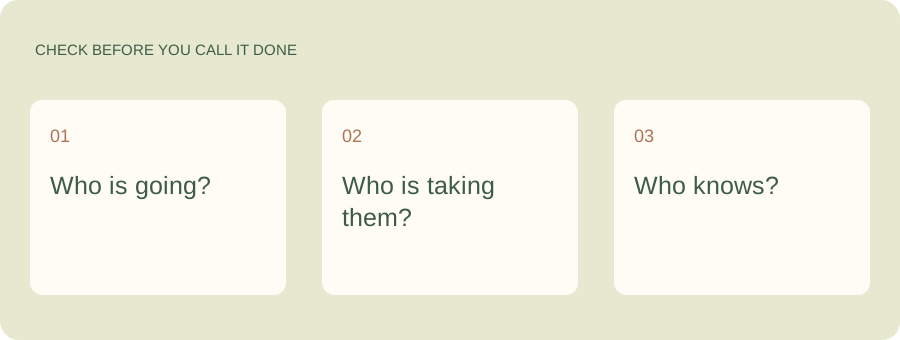
A few common questions
Can a calendar replace a co-parenting communication app?
Not necessarily. A calendar mainly organizes dates. Your arrangement may need different communication or record-keeping features. Keep any agreed or required process in place.
Should children have access to the calendar?
Choose an age-appropriate view if it helps them know what is next. Keep adult negotiations and unresolved changes with the adults rather than asking the child to interpret them.
How do we handle last-minute changes?
Use the agreed communication method to confirm the change, then update the calendar and check the affected handoff. Do not assume an edited event alone means the other person has accepted it.