A shared Christmas planning checklist should cover the dates you’ve agreed, spending limits, gifts, meals, travel and hosting jobs. Give each responsibility one owner and a realistic deadline. Start by choosing what your household wants to celebrate, then plan only the activities and traditions you’re actually keeping this year.
The plan at a glance
Build the Christmas plan around commitments before shopping lists. Agree where your household will be, which events you want and what each person can take on. List the spending decisions, gift recipients, meals and travel details that follow.
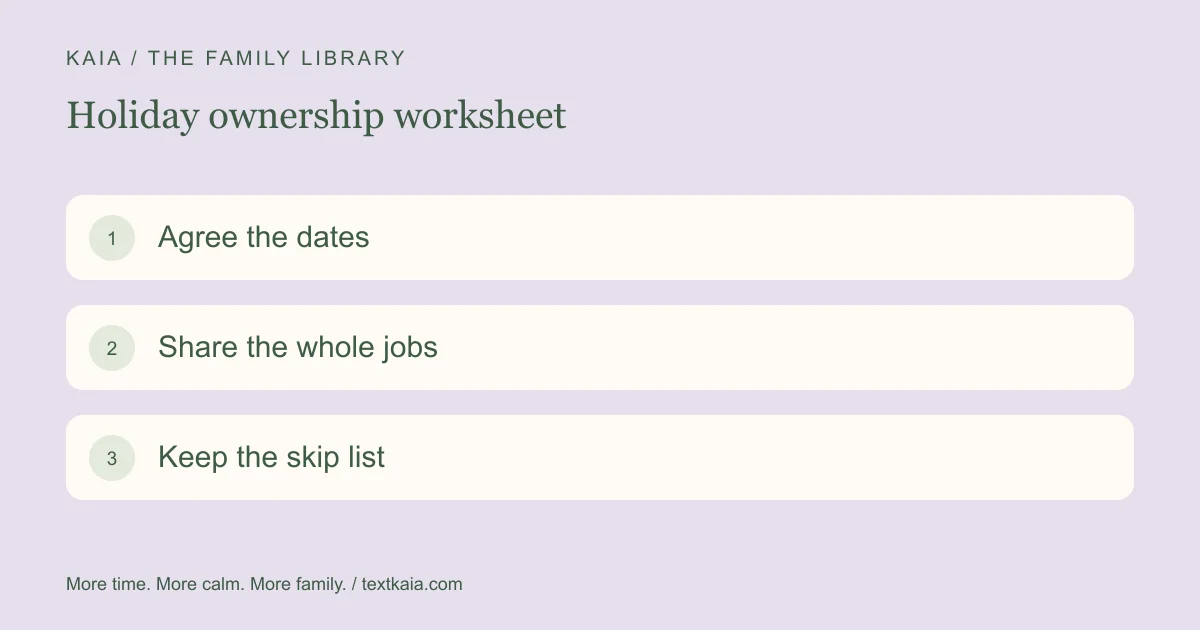
Assign an owner to each whole job, including the cleanup or return trip. Put deadlines beside tasks that depend on delivery, reservations or school replies. Keep a visible skip list so optional traditions don’t quietly become obligations again.
This checklist is for families celebrating Christmas; adapt it to your own traditions and other holidays.
First, choose the shape of the holiday
Talk through the dates, visitors and travel before promising a meal or a spare bed. Check the adults’ work schedules and children’s school dates. If your family spans two homes, confirm the existing arrangements directly with the adults involved.
Agree a spending approach together. Use amounts your household chooses; the checklist doesn’t need an impressive budget or a new set of decorations.
A few weeks out: turn promises into jobs
List gifts by recipient, buyer and delivery deadline. Add wrapping or collection if someone needs to do it. For a meal, name the menu owner, shopping owner and anyone bringing a dish.
Check bookings, visitor arrival times and any school events that need a response. Put the actual date on the plan instead of “the week before Christmas,” which can mean different things to different people.
The final week: check the moving parts
Confirm arrivals, opening hours and anything still in transit. Choose easy meals for travel and preparation days, when cooking energy is likely to be limited. Keep one grocery list for the gaps.
Before guests arrive, decide who handles beds, towels, food and cleanup. The host doesn’t need to be the answer desk for every small question.
Leave some space after the celebration
Add returns, leftover food and the trip home to the plan. A gift isn’t finished if the size exchange lives in one person’s head until February.
Review the optional list once more. Keep the traditions people want, share the preparation and let a few things go. An ordinary family afternoon can belong on the calendar too.
A simple example
Illustrative household example. Replace it with your own details.
| Commitment / task | Owner and deadline | What we agreed to skip |
|---|---|---|
| Before shopping | Agree dates and spending | One household conversation |
| Before guests arrive | Confirm food, beds and arrivals | Named owners |
| After the day | Leftovers, returns and cleanup | Share the finish |
Related help: Planning family meals · A smaller weekly reset.
Questions that come up
When should we start planning Christmas?
Start when you need to make the first commitment, such as travel or a delivery deadline. Work backward from your household’s actual dates rather than a universal timetable.
How do we divide the work?
Assign whole responsibilities, including preparation and follow-up. Someone who owns gifts for one side of the family can handle the ideas, purchase, wrapping and exchange details.
What can we leave off the checklist?
Anything your family has chosen not to do. Writing down a shared decision to skip something can prevent it from returning as a last-minute job.