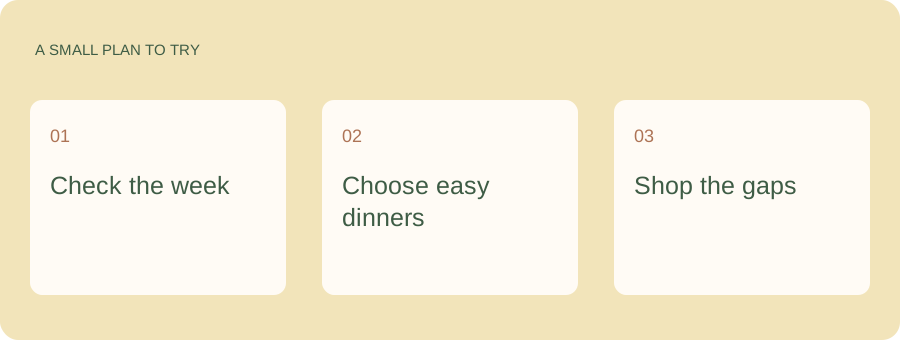
Choose meals around your busiest nights, check what is already in the kitchen, reuse a few ingredients and leave one flexible slot. Turn the plan into a shopping list only after the week makes sense.
Mark the evenings before choosing the food
Label each night quick, cook, reheat or flexible. Put your easiest dinner on the night with the least capacity. A more ambitious recipe belongs on the evening when somebody actually wants to make it.
Ask who is cooking and who is getting the ingredients. An attractive meal plan with no owner is still a question waiting to happen at five o’clock.
A seven-day example you can borrow
This is an illustrative week, not a nutrition prescription. Change portions and ingredients for your household.
| Day | Dinner | Why it fits |
|---|---|---|
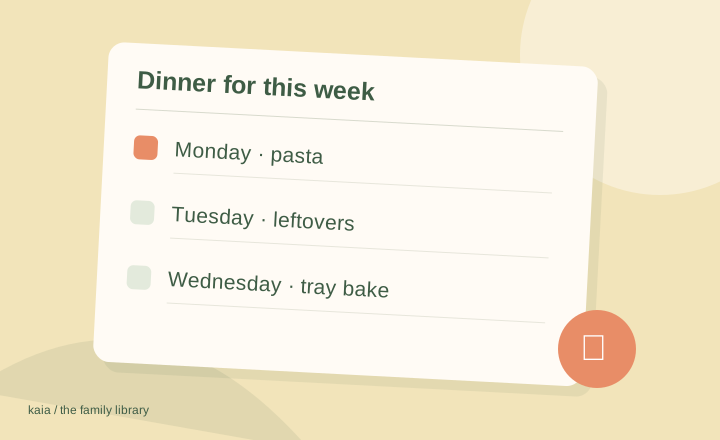
| Monday | Pasta with tomato sauce and vegetables | Familiar start; sauce can be made ahead |
| Tuesday | Bean or chicken wraps with chopped vegetables | Components can be prepared before practice |
| Wednesday | Tray of potatoes, vegetables and your preferred protein | One shared preparation session |
| Thursday | Leftover wraps or filled baked potatoes | Uses what is already ready |
| Friday | Homemade pizzas or an easy freezer meal | Low planning effort |
| Saturday | A family favorite chosen together | More room for a shared cooking job |
| Sunday | Flexible slot | Use leftovers or adjust to the weekend |
Check the kitchen before the shop
Look in the fridge, freezer and cupboard. Write down anything that needs using soon, then fit it into the plan. Check sauces, oil and pantry basics as well as the main ingredients. It is surprisingly easy to buy another bag of rice while forgetting the one thing the recipe actually needs.
Let Kaia take a turn deciding dinner.
Use the worksheet to sketch the week, or tell Kaia what is already in the fridge, which nights are busy and what your family eats. She can help with the meal plan and grocery list while you stay in the family chat.
Make repeated ingredients do useful work
Choose a few ingredients that can appear in different meals. Chopped vegetables can work in wraps and pizza; a cooked batch can help on the next busy night. Repeat the ingredient, not necessarily the whole dinner.
Plan how leftovers will be stored and used, following safe food-storage guidance for the ingredients involved. Do not build the week around food staying usable longer than it should.
Leave room for the meal nobody wants
A flexible slot keeps a changed plan from becoming waste. Keep one reliable backup dinner in mind and decide when you will use it. The aim is fewer decisions during a busy evening, not perfect obedience to Sunday’s spreadsheet.
Make the plan easy to find
Use the printable kit, share the editable plan, or put the summary where your family checks the day. Kaia can be part of that conversation: start with the busy evenings and the food you already have, rather than asking for seven unrelated recipes.
Three meal-planning tips for a busy week
Keep a short list of meals your family already eats. Repeating a reliable dinner reduces one decision; it does not need an apology. Plan leftovers deliberately for a late evening rather than hoping there will be enough.
Assign the shopping and cooking separately when different people do them. A plan is easier to carry out when both know what is missing and when it is needed. Leave one flexible meal for a change of plans, and keep a freezer or cupboard backup you are happy to use.
See a worked family example
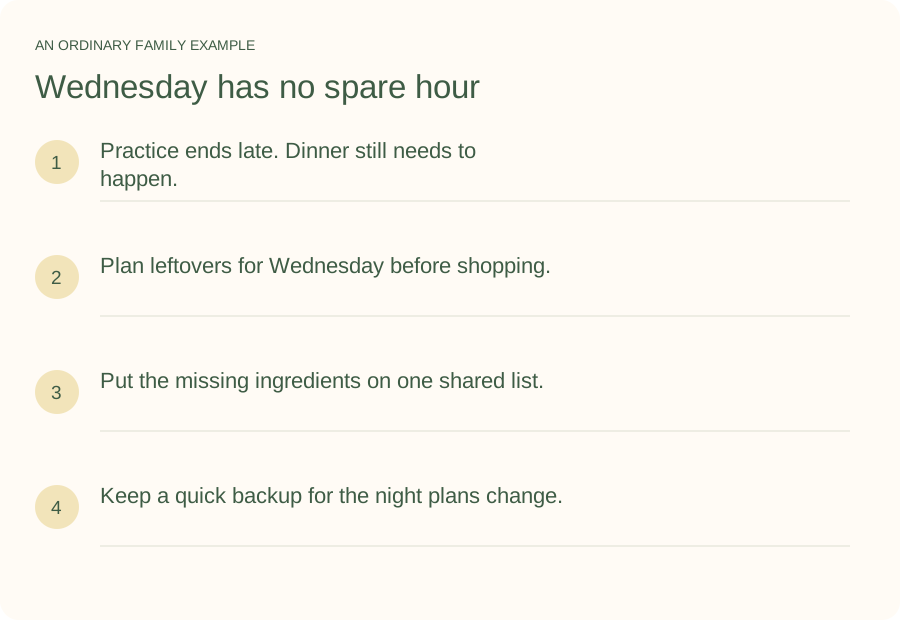
Illustrative household example; adapt the names and details to your week.
A few common questions
How many dinners should I plan each week?
Plan the nights where a decision would help. Four or five planned meals, a leftover night and a flexible slot may be easier to maintain than seven new recipes.
Should I plan breakfast and lunch too?
Add them when they create repeated decisions or shopping surprises. You can keep a small rotation rather than assigning something different every day.
Can I edit and print the planner?
Yes. The meal kit includes an editable week and shopping-list section, plus a print-ready PDF. Replace the sample dinners with your own.