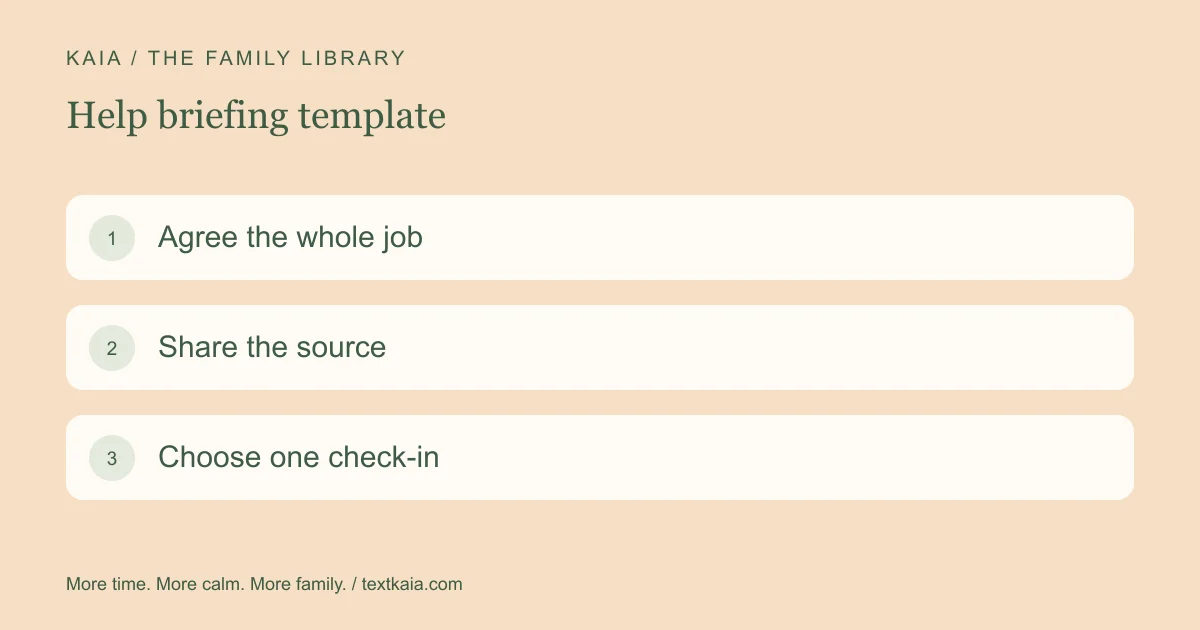
To delegate a household task, agree on the result, the owner, the deadline and any decisions that need checking. Share the information and access needed to finish. Let the owner choose the method, then use one agreed check-in instead of supervising every step or sending repeated reminders.
The plan at a glance
A workable household handoff includes the work around the task. For a school form, that might mean finding the notice, checking the deadline, completing the reply and confirming it was received. Agree what done means and which decisions the owner can make.
Share the source information once, and choose how you’ll hear about an exception. Start with a repeatable, low-stakes responsibility so both people can practice the arrangement. For paid help, put the same essentials in a short brief and discuss expectations before the first visit.
Choose a whole responsibility
Instead of “help with the school trip,” try “own the trip reply, payment and things-to-bring list.” Keep the scope small enough that the owner can actually take it on.
Ask what capacity they have this week. A handoff works better when someone agrees to it than when a task appears on their calendar without a conversation.
Describe the finish line
Give the owner enough detail to judge whether the job is complete. “Kitchen ready for breakfast” could mean dishes away, usable counter space and tomorrow’s cups accessible. It doesn’t need to mean cleaning every cupboard.
Separate what matters from your preferred technique. If the result is safe, workable and agreed, a different method can still count as done.
Supply the missing information
Share the original message, contact, location or household preference. Where access is required, use an appropriate shared account or permission rather than putting passwords in a group chat.
Someone cleaning your home may need to know what to skip. Your babysitter needs a current brief. Whoever handles groceries needs the household’s allergies and the list, not a stream of corrections after checkout.
Agree how exceptions come back
Name the decisions that require another conversation, such as spending above an agreed amount or a change to someone else’s pickup. Everything else can stay with the owner.
Choose one review after the first attempt. If the job returns unfinished, find the obstacle: unclear scope, missing information or no time to do it. Revise the arrangement instead of adding a permanent layer of reminders.
A simple example
Illustrative household example. Replace it with your own details.
| Responsibility and owner | What done means / deadline | Information / decisions to check |
|---|---|---|
| Responsibility | School trip reply | Owner: Sam |
| Done means | Reply and payment confirmed | By Wednesday |
| Ask before | Booking an extra adult place | One message if needed |
Related help: Sharing the whole household job · Caregiver handoff details.
Questions that come up
What if I can do it faster myself?
You might be faster at first because you hold the information and experience. Start with one responsibility and allow time for another person to learn it.
How do I brief paid household help?
Agree scope, priorities, access, timing and a way to raise questions. Use the brief as the starting conversation rather than assuming it replaces one.
What if our standards differ?
Discuss the result you both need. Name essential requirements and leave room for different methods where the outcome still works.