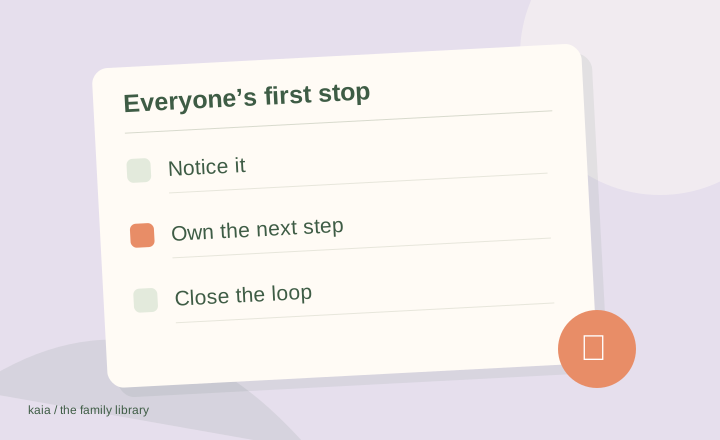
The default parent is the person family questions and responsibilities tend to land on first. Changing that pattern takes more than dividing chores: other caregivers need access to the information, authority to act and ownership of the follow-through.
What does “default parent” mean?
It is a useful description of a family pattern, not a diagnosis. You may be the first contact for school, the keeper of appointments or the person everyone asks before making a plan. The visible jobs can look evenly divided while this information work stays concentrated.
Notice the pattern for a normal day. Which questions reach you? Which decisions wait for you? Which tasks happen only after you mention them? A short list is enough; you do not need another tracking project.
Move a responsibility, not just today’s errand
Here is an illustrative change that gives the other adult room to act.
For a practical example of moving the whole responsibility, read our Fair Play method guide before agreeing on the next handoff.
| Small request | Whole responsibility |
|---|---|
| Can you pack the bag? | Own the activity kit: check the schedule, wash it and have it ready |
| Can you take them on Friday? | Own this appointment: confirm the time, transport and follow-up |
| Can you buy a present? | Own this party: reply, choose the present and settle collection |
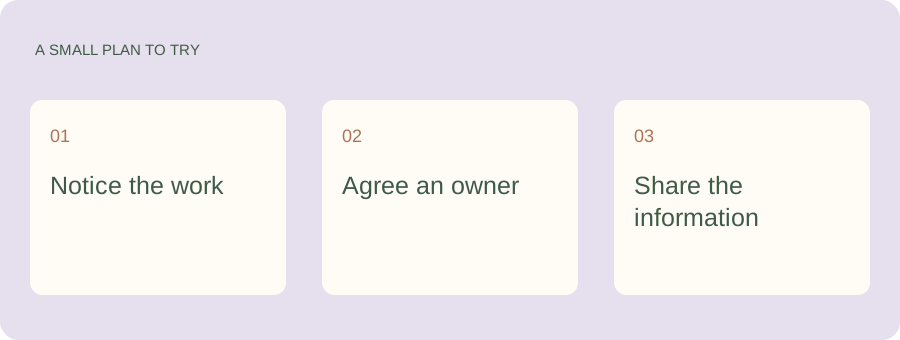
Make the answers available to someone else
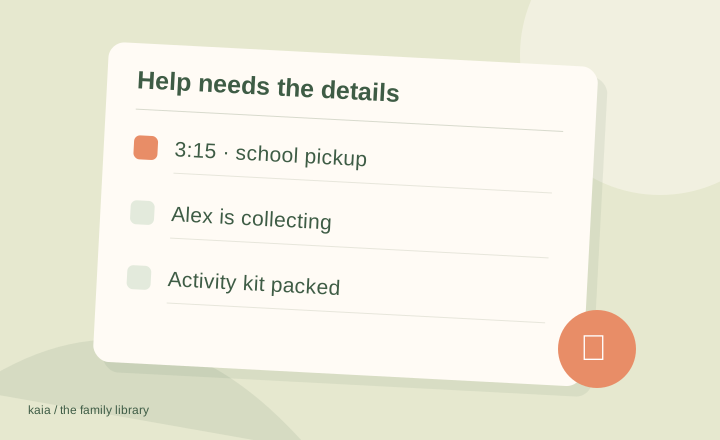
Share the school notice, contact details and location of the relevant supplies. If every answer requires a private message to you, the handoff still runs through you. Agree where current information belongs and use that place consistently.
When a question comes back, show where the answer lives. If the answer is missing, the new owner can help close the gap. The aim is a shared source of information, not a new job documenting every detail of your life.
Let the next question go to Kaia
Give Kaia the useful family details so the next question has somewhere to go besides you. Start with one schedule or arrangement everyone asks about.
Give the owner room to decide
Agree the important outcome and any boundaries. A parent handling lunches needs to know dietary requirements and the school rules. They do not necessarily need to cut the sandwich your way.
Set a backup for genuine changes in capacity. Asking for cover is different from quietly returning an entire responsibility to the person who used to carry it. Make that exchange explicit.
When you are parenting on your own
The options are different when there is no second adult to share the day-to-day work. Focus on fewer repeated decisions, clearer information for occasional helpers and tasks you can simplify. A rotating dinner list or a standing pickup arrangement may help more than a long ownership chart.
Kaia can provide a place to ask about the information you have shared and help organize the next task. Practical help still matters; software does not replace the people who can show up.
Review what stopped coming back
After a week, look for fewer repeated questions and fewer jobs waiting for you to start them. If the other adult completed the task but you still researched, prepared and checked it, talk about that specific sequence.
Keep the conversation concrete: “I arranged the appointment and packed the bag; next time can you handle those parts too?” The shared-ownership guide gives you a fuller handoff format.
See a worked family example
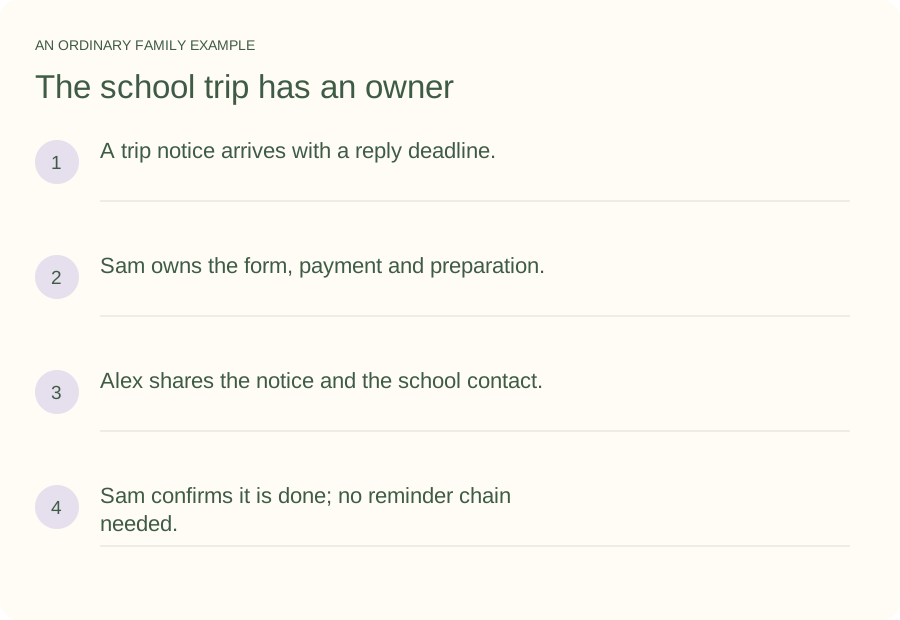
Illustrative household example; adapt the names and details to your week.
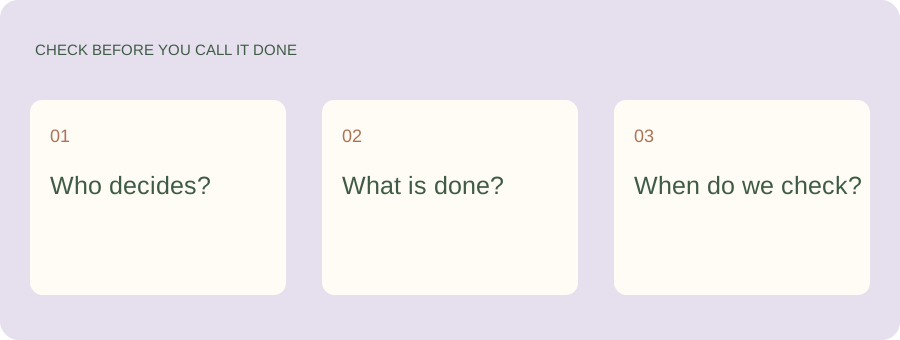
A few common questions
Can both adults feel like the default parent?
Yes. Each may be carrying work the other does not see. Compare complete responsibilities, including planning and follow-up, before deciding what needs to move.
How do I stop being the default parent without a huge overhaul?
Choose one recurring responsibility and transfer the information and decisions with it. Give it a week, review what still returned to you, and improve that handoff before adding more.