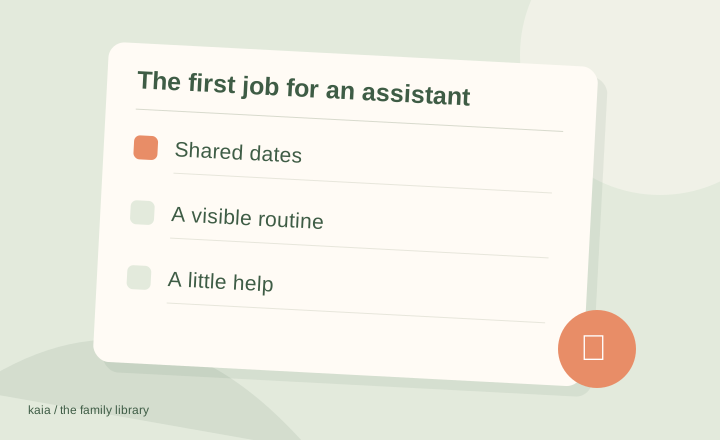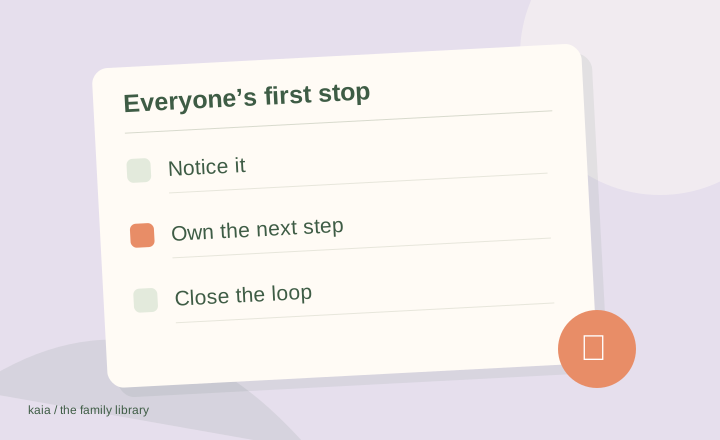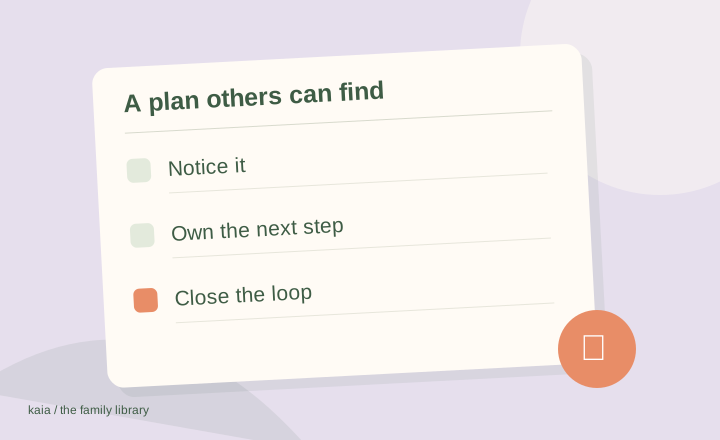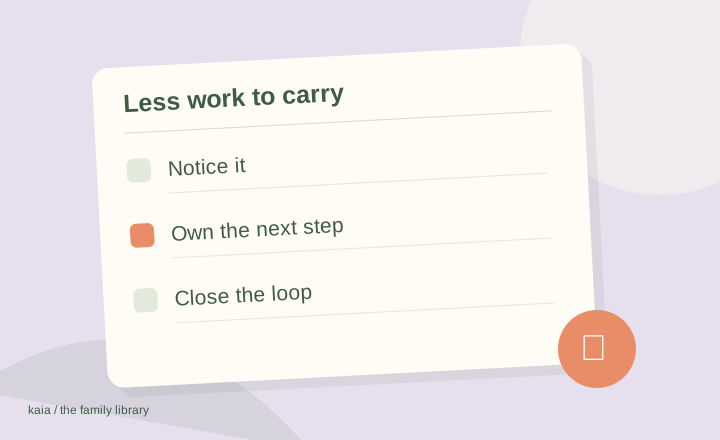
Our standard for useful family AI is simple: it should remove more coordination work than it introduces. Ask what you no longer have to remember, repeat or maintain. A longer task list is not the same as a lighter day.
The work around the tool counts
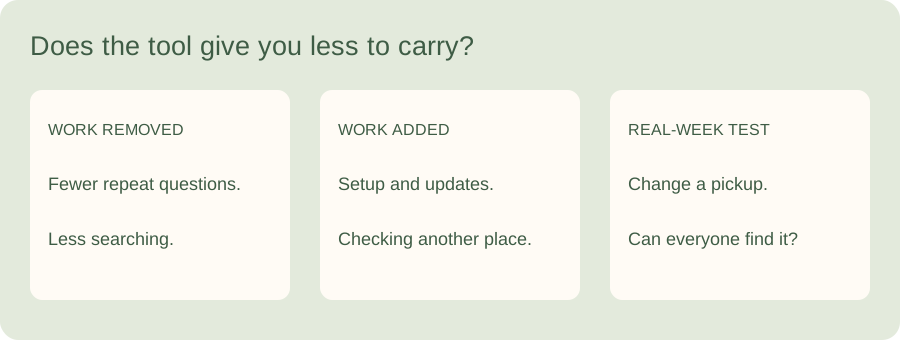
Entering the date takes time. So does checking whether it synced, telling another person where to look and correcting the old version somewhere else. These small steps can be easy to leave out of a product demonstration.
When evaluating a family tool, include the ordinary maintenance in the trial. Test a changed pickup or a dinner plan that moves. Those moments tell you something a freshly organized calendar cannot.
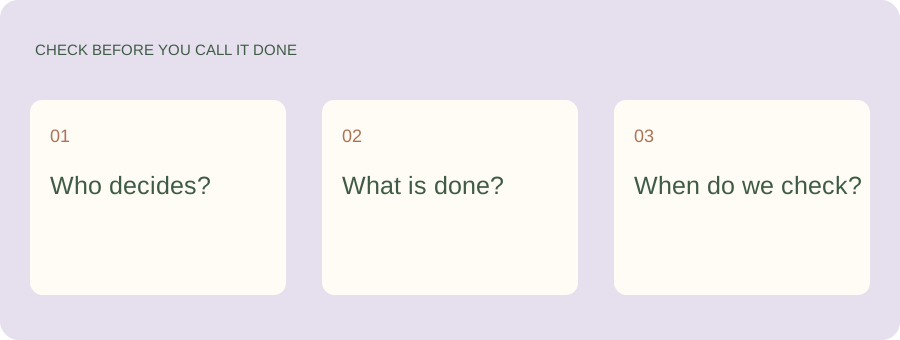
Three questions we would ask of any family tool
This is our practical self-check, not a validated assessment or a score for your family.
Put those questions to work with our AI family assistant guide: three realistic ways to start, including a missing detail and a change of plan.
| Question | Look for this in a real week |
|---|---|
| What stopped coming back to me? | Another person can find the answer or take the next step |
| What new work did I take on? | Setup, duplicate entry, checking and reminders to use the tool |
| Does it still help when plans change? | The affected people can understand the current plan without reconstructing it |
Why we started with the conversation
We are parents and co-parents based in Portugal and the U.S., with multicultural families that speak multiple languages. Trying different family tools left us asking the same question: could help meet families where they already are, without another app or special device?
That is why Kaia begins in messages. The new pickup time, the dinner question and the school notice are already part of family conversation. We want those details to become usable help without requiring parents to maintain another destination first.
Try one less thing to carry
Give Kaia a real piece of family admin. Start small enough to see how the help works in your own week.
Leave family decisions with the family
Useful assistance can organize information, help prepare a plan and surface the next action. Parents still decide what matters, which commitments to keep and how to share responsibility.
We do not want a more efficient week to become an obligation to fit more into it. Sometimes the useful outcome is dropping an activity, choosing an easy dinner or leaving a weekend free. That is a product philosophy, not a measured claim about every family who uses Kaia.
Try one job you would like to stop carrying alone
Choose a task you currently explain more than once. Give Kaia the relevant details, then see how the help fits your actual week. Keep the test ordinary enough that you can notice whether anything got easier.
Use the free self-check to record what changed and what still needed you. Our ambition is more calm and more room for the people in the household. The technology should earn its place by helping with that.
See a worked family example
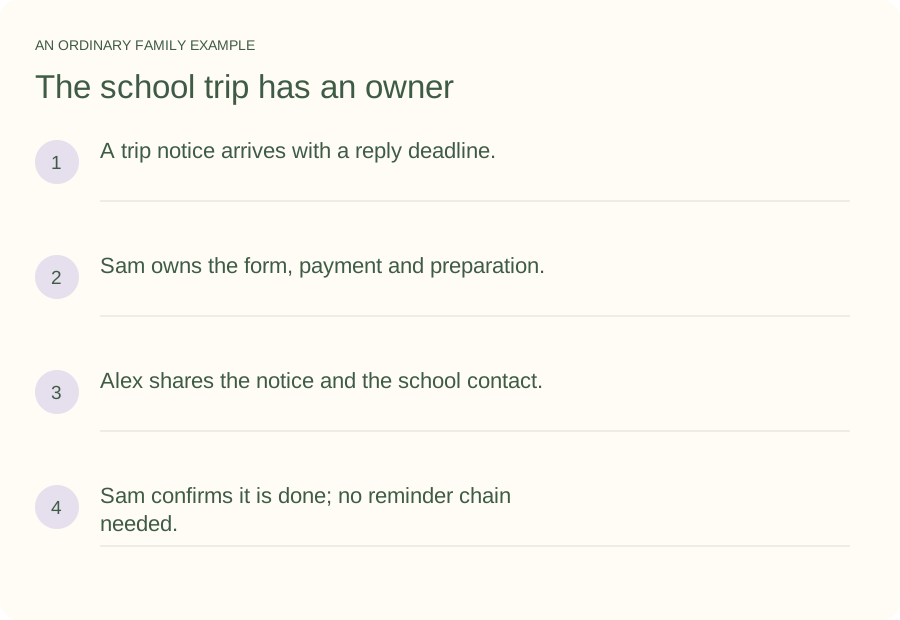
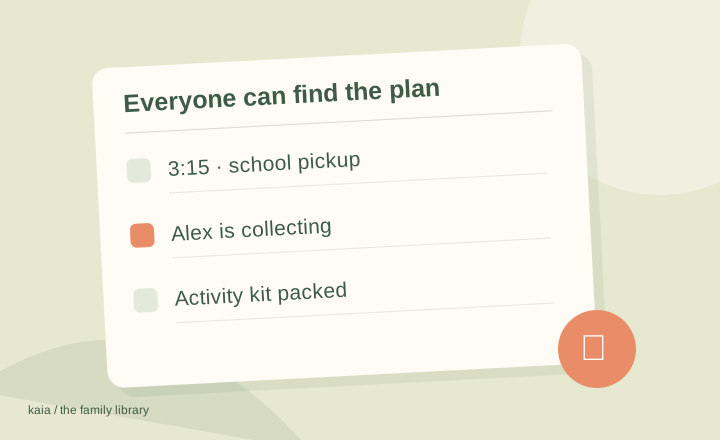
Illustrative household example; adapt the names and details to your week.
A few common questions
Can AI reduce mental load?
It can help with parts of coordination, such as organizing shared details and preparing the next action. Whether a particular tool helps depends on the work it removes and the maintenance it adds. Try a real task and assess both.
How is this different from comparing AI family assistants?
This article explains Kaia’s product philosophy and a way to judge usefulness. Our AI family-assistant comparison covers choosing between approaches and the tasks you want help with.