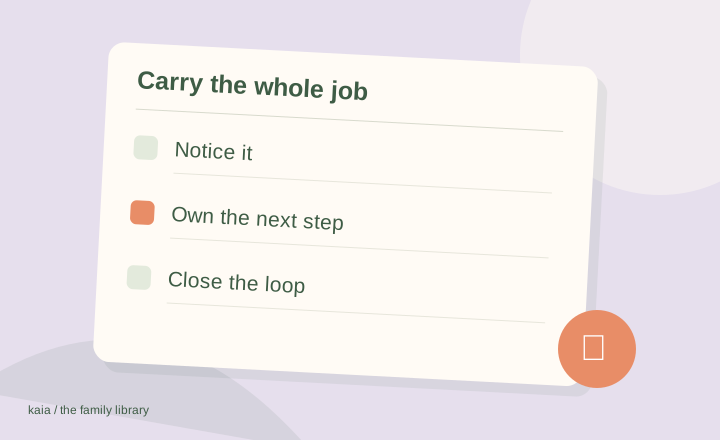
Fair Play is Eve Rodsky’s approach to making domestic work visible and sharing ownership. Its conception, planning and execution framework asks families to consider the whole responsibility. Once you agree who owns a job, make sure they have the information and room to carry it through.
What the Fair Play method asks you to notice
The visible task is often only the final step. Before dinner is cooked, someone noticed that a plan was needed and worked out what to buy. Fair Play names that earlier work as part of responsibility, too.
This is a practical introduction to the idea and its follow-through, not the official card deck or a replacement for Rodsky’s materials. The source link below leads to her explanation.
Try the idea with one ordinary responsibility
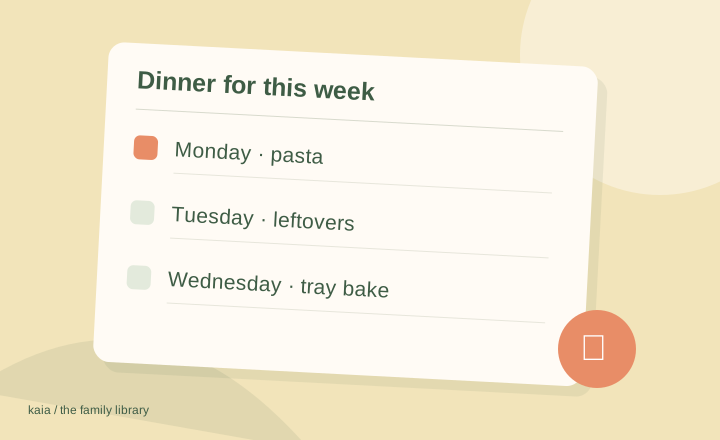
Here is an original dinner example, using the framework’s three parts.
| Part | Dinner example |
|---|---|
| Conception | Notice that Wednesday needs a quick dinner because practice ends late |
| Planning | Choose something workable, check ingredients and arrange shopping |
| Execution | Make the meal and handle the agreed finish line |
Agree what ownership includes
Does dinner ownership include shopping, lunch leftovers and kitchen cleanup? There is no benefit in discovering different assumptions at 8 p.m. Agree the boundary and a workable standard before dividing the jobs.
Give the owner access to the schedule and relevant preferences. Keep decisions that affect another adult’s time visible to them, rather than assuming ownership means deciding everything alone.
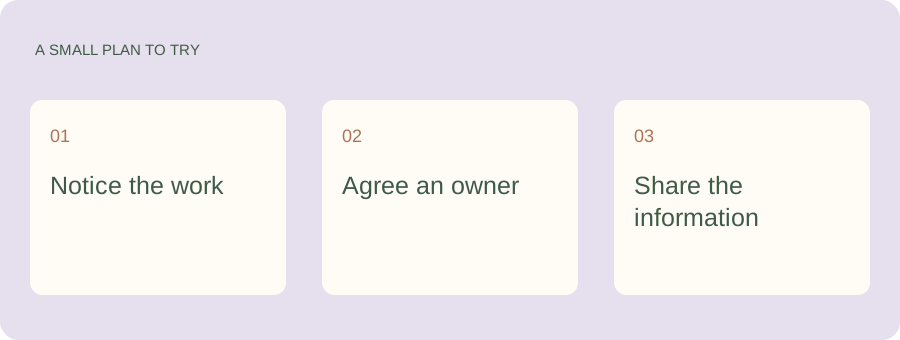
Give the agreement a practical next step
You decide the ownership. Kaia helps with the dates, information and reminders around it. Try one responsibility from your conversation.
Make room for the week to change
If practice moves, the person who owns dinner needs the update. If the owner needs cover, name the handoff and the remaining steps. A backup arrangement can protect the agreement from falling apart whenever one person has a difficult day.
Try: “I need cover for Wednesday dinner. The ingredients are in the fridge, the recipe is saved and we need to eat by six. Can you take it?” That carries more of the planning across than “Can you help tonight?”
A dinner handoff that carries the planning too
Illustrative conversation: “I own Wednesday dinner, but I need you to cook this time. The recipe is saved, the ingredients are in the fridge, and we need to eat at six. Can you cover cooking and the agreed cleanup? I will handle the shopping.”
That is a smaller request than asking somebody else to rediscover the whole dinner plan. If the owner cannot prepare those details, name that too and agree what is moving. The aim is a clear agreement, not a beautifully worded request.
| If this still happens | What to clarify at your next check-in |
|---|---|
| One person keeps asking what to buy | Whether planning and shopping moved with dinner ownership |
| The meal is made but cleanup is disputed | Where the agreed responsibility ends |
| A late finish sends every decision back to one parent | Who arranges cover and what information goes with it |
Use technology for the details around the agreement
A tool can help keep dates, notes and reminders available. It cannot make the underlying agreement for you. Decide the responsibility together, then give Kaia the useful context and next task.
At your next check-in, ask whether noticing and planning actually moved with the task. If one person still builds every shopping list, changing the cook may have moved less work than you intended.
See a worked family example
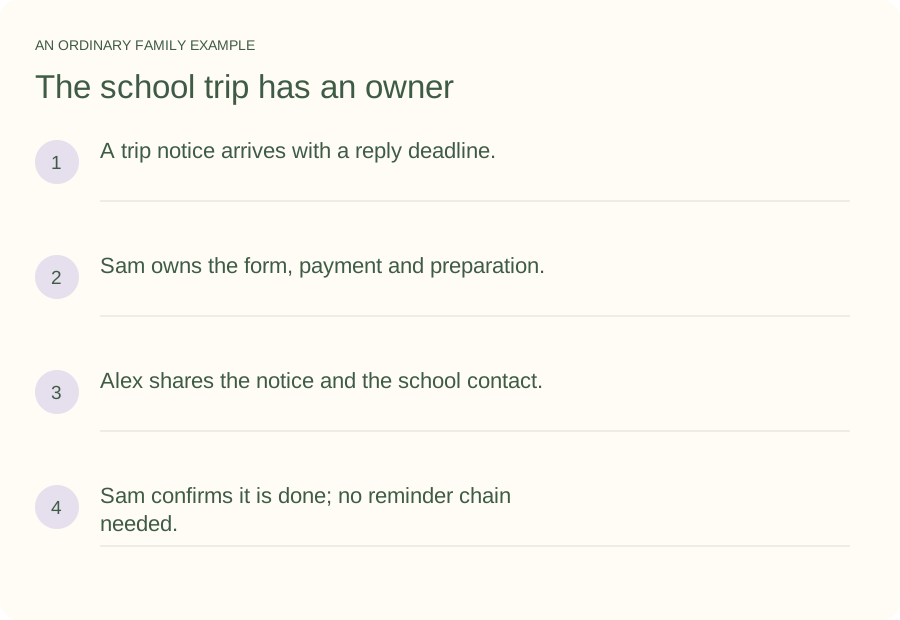
Illustrative household example; adapt the names and details to your week.
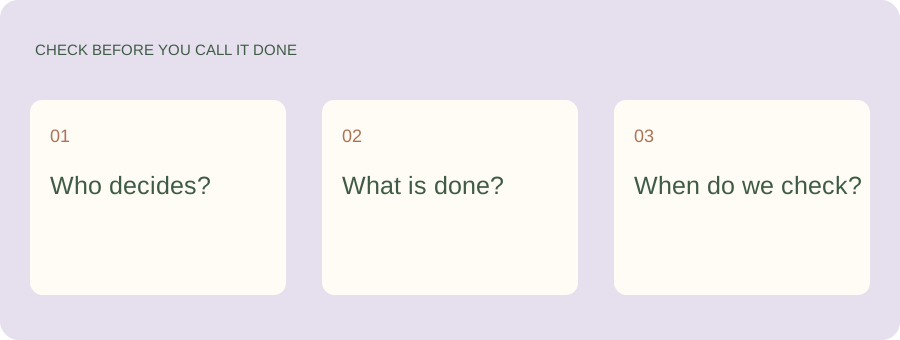
A few common questions
Is Kaia affiliated with Fair Play?
No. Fair Play is Eve Rodsky’s work. This guide credits that approach and offers original examples of the coordination around a household agreement.
Do I need the cards to use this guide?
You can use the practical handoff example here independently. For the full Fair Play method and its materials, use the creator’s official resources.
Can an app make household work fair?
A tool can help with shared information and follow-through. Fairness also depends on the responsibilities, capacity and expectations the people involved agree on.