Explain mental load with one familiar task and the thinking around it. Describe what you notice, plan and follow up, explain how that affects your day, then ask for ownership of a complete responsibility. A specific example gives you something you can change together.
Start with a moment you both recognize
Choose a time when neither person is rushing out or settling a child. Keep the first conversation to one example. “The school trip is taking up more space in my head than the form suggests” gives you somewhere concrete to begin.
Describe what happened without guessing the other person’s intentions. You can be clear about being tired or frustrated while staying specific about the work you want to share.
How do I explain mental load to my husband?
Try this wording, adapted to your household: “When I ask you to return the permission slip, I have already read the message, found the deadline and checked what we need. Afterward, I’m still wondering whether it got done. I want us to share that whole responsibility, including remembering it.”
Then make a request: “Could you own school-trip notices this month, from reading the message through getting the right things into the bag? Let’s make sure you can see the notices and agree which decisions need both of us.” This example works with any partner; adjust the language so it sounds like you.
Show the difference between doing and managing
Use a few rows from your actual week, rather than presenting a case file of every unfinished job.
| What got done | What still needed thinking |
|---|---|
| The shopping arrived | Someone chose meals, checked supplies and built the list |
| The child got to practice | Someone tracked the change, arranged transport and found the kit |
| The form was returned | Someone read the notice, found the deadline and checked the details |
Put the agreement into the week
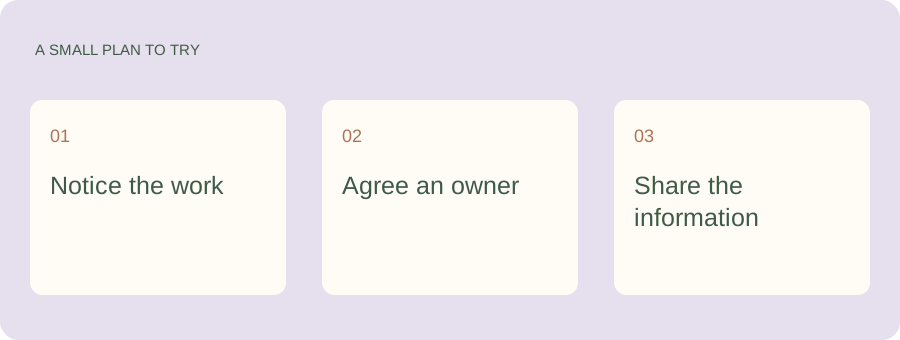
Once you agree the responsibility, give Kaia the owner and deadline. Keep the plan in the conversation where your family can come back to it.
When the answer is “you only had to ask”
You might say: “Asking is one of the jobs I want us to share. I’m looking for you to notice when this needs doing, as well as do it.” Follow that with the responsibility you want to discuss.
The first handoff will take some explanation. Agree which information is missing and where it belongs, so that explaining does not become a permanent part of your role.
Finish with one agreement
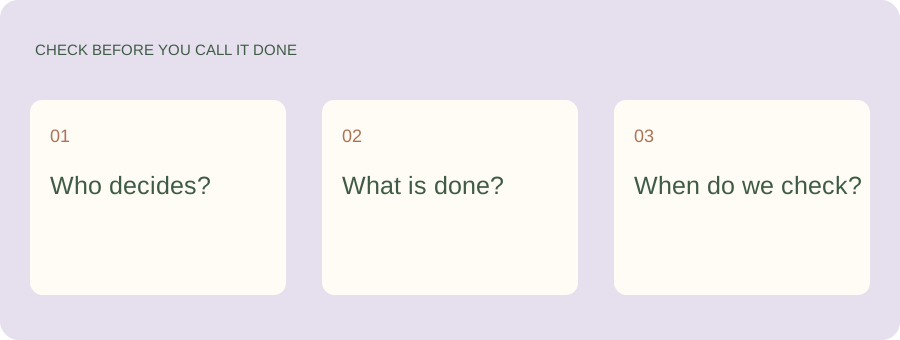
Write down the owner, the outcome, the information they need and the date you will check in. If you disagree about the standard, settle the parts that affect other people before starting.
Next week, discuss what actually happened. Did the responsibility stay with its owner? Did plans change? A useful agreement can improve through a few ordinary weeks. The worksheet gives you a short place to capture it.
See a worked family example
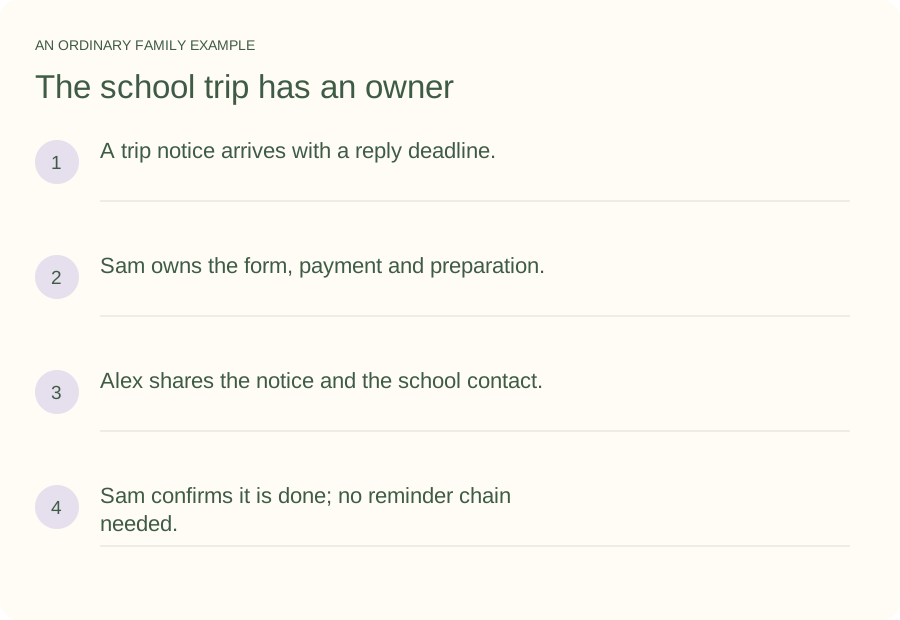
Illustrative household example; adapt the names and details to your week.
A few common questions
Should I send my partner an article?
You can use an article to name the problem, but add your own example and request. “This describes what happens with school notices; can we talk about who owns them?” is more actionable than sending a link alone.
What if my partner also feels overloaded?
Include their unseen work too. Write down one responsibility each, compare the full sequence and consider what can be simplified before assigning more work.