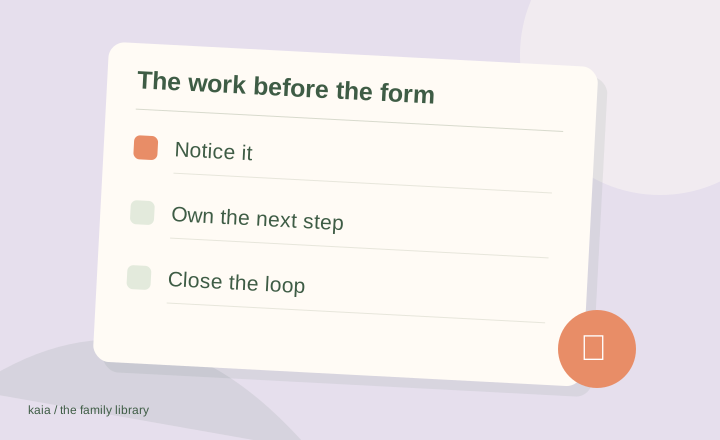
Mental load is the ongoing work of anticipating, planning and keeping track of what needs to happen. In family life, it includes noticing the next school deadline, arranging transport and checking that a task is finished—even when someone else does the visible job.
What mental load looks like in an ordinary week
These are illustrative examples. The same task can involve both physical work and the thinking around it.
| Visible task | Work around the task |
|---|---|
| Buy new shoes | Notice the fit, check the school rules, find a size and arrange a return |
| Go to a birthday party | Reply, check the address, buy a present and arrange collection |
| Cook dinner | Remember who is home, use the food before it spoils and choose a backup |
| Attend an appointment | Know when it is due, book it, arrange time off and keep the follow-up details |
Is mental load the same as invisible labor?
Invisible labor is a broader everyday term for work that goes unnoticed. Mental load describes the thinking and tracking part. Washing the sports kit is physical work; remembering which day it must be clean is mental work. Both matter, and the same person may be doing both.
Emotional support is another part of caring for a family. Listening to a worried child and remembering the school form can happen in the same evening, but a task list will not describe everything that evening asks of you.
Why a shared calendar can leave the remembering untouched
An event says when the trip happens. It may say nothing about who returns the form, checks the weather or packs the bag. If the same parent still notices every missing detail, sharing the date has only shared one part of the job.
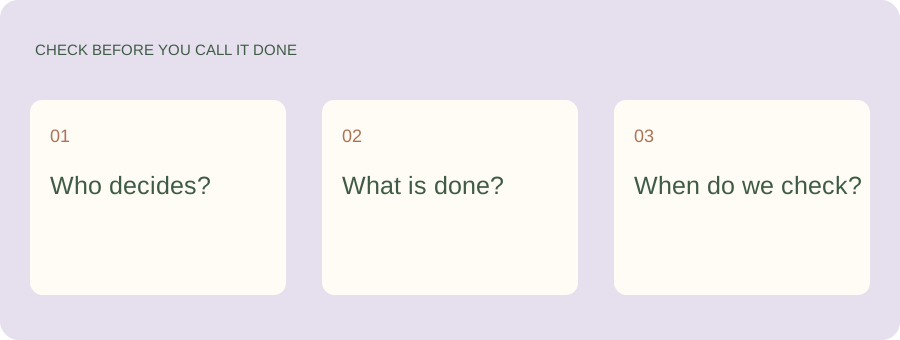
Try asking a more useful question than “Is it on the calendar?”: “Could the person responsible finish this without asking someone else to reconstruct the plan?”
Give the remembering somewhere to go
Start with one task you have been holding in your head. Give Kaia the date, owner and useful details in your family conversation.
Make one complete responsibility visible
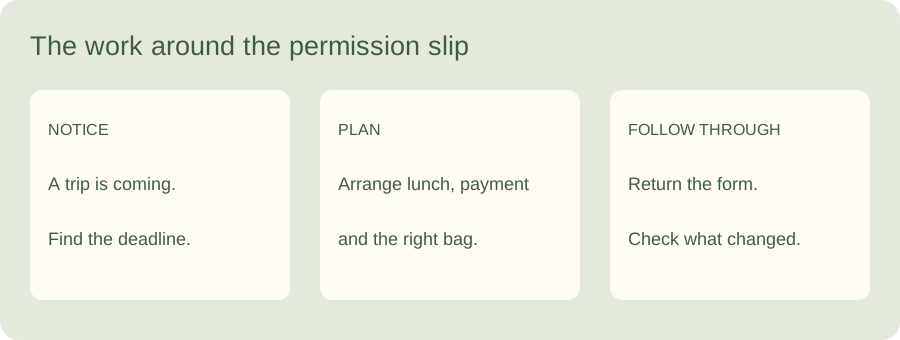
Choose a familiar job and write down what happens before, during and after it. For a school trip, that might mean reading the notice, returning permission, arranging payment, preparing lunch and checking collection. Use our mental-load worksheet to keep the whole sequence together.
Then agree who owns it and give that person access to the original information. Start with one recurring job. You can learn more from a real handoff than from making a perfect inventory of the household.
Leave room to do less
Some work needs a new owner. Some needs a simpler version. Some can stop. Before creating another reminder, ask whether the job still matters to your household. A bought birthday cake does not need a project plan.
At the end of the week, ask which questions stopped coming back to the same person. That is a practical sign to look for; counting completed boxes alone can miss the management work.
The question behind Kaia
We are parents with families of our own, including co-parenting and multicultural households. We had tried different devices and apps, but the work of keeping everything updated still came back to us. We wanted a solution that comes to the family, in group chats and a browser, instead of another place everyone has to remember to manage.
Our approach is to begin where the family already talks. When you try Kaia, look for one less detail you have to carry or explain. The point is a calmer family day, not a more elaborate system.
See a worked family example
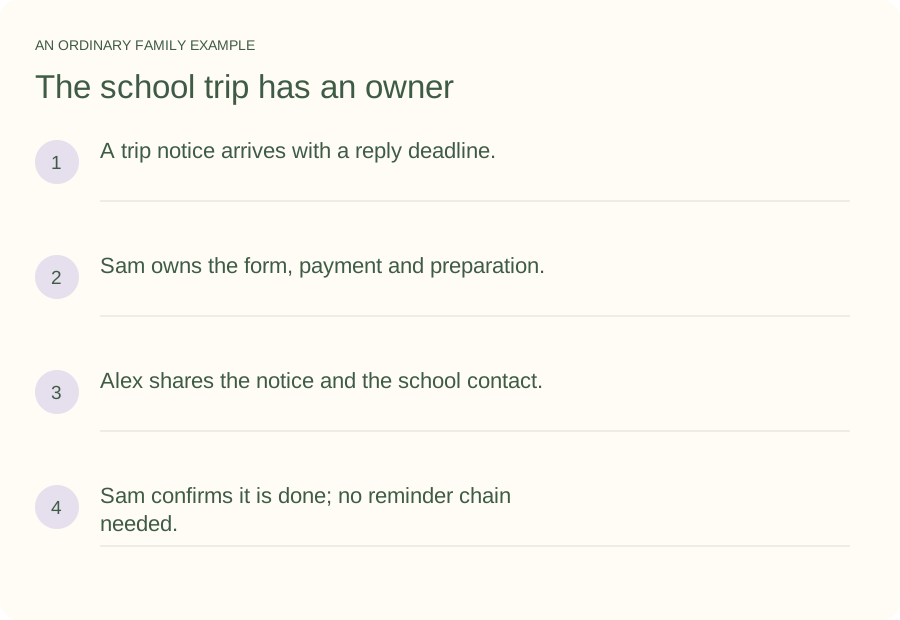
Illustrative household example; adapt the names and details to your week.
A few common questions
Does everyone experience mental load?
Anyone responsible for anticipating and coordinating care can carry mental load. The amount and distribution vary. Look at who notices, plans and follows up in your household rather than assuming the answer from a parent’s role.
How do I reduce mental load today?
Pick one recurring responsibility, make its hidden steps visible, and agree an owner with access to the information. Also choose one unnecessary task to simplify or stop. Use Kaia to help keep the shared details accessible.