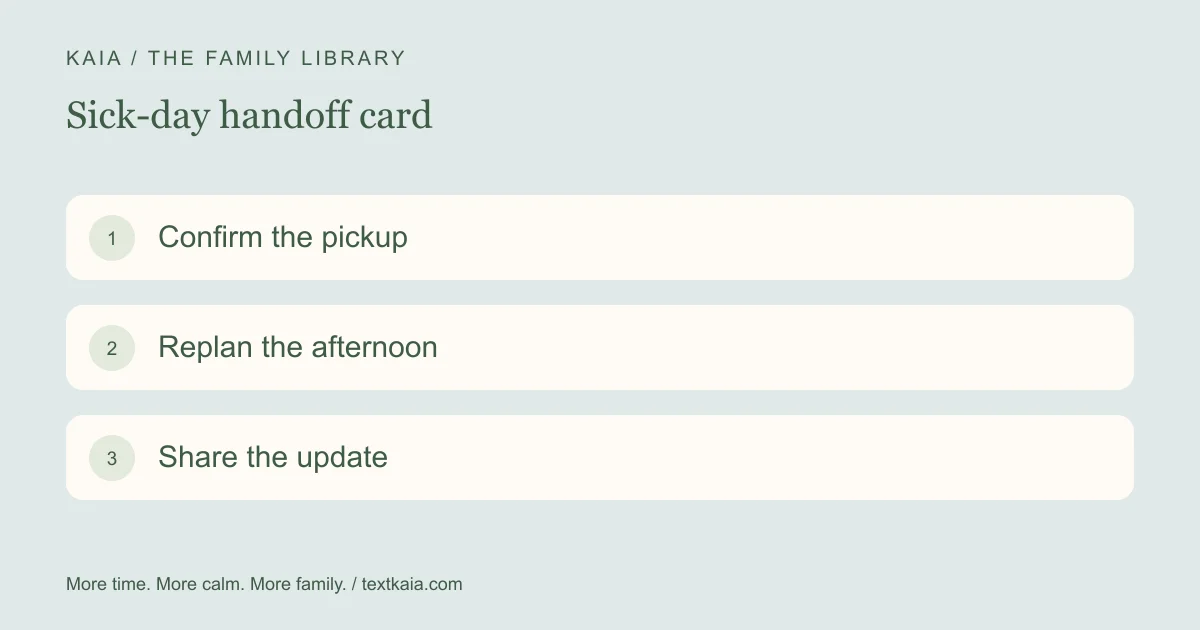
A family sick-day plan names who receives the school call, who can collect, who stays with the child and who updates the rest of the day. Keep school-approved pickup contacts current and agree a backup route. Follow the school’s instructions and your clinician’s advice for health questions and return-to-school decisions.
The plan at a glance
Prepare the coordination before the first school call. Check which adults the school can contact and who is authorized to collect. Agree how your household will confirm a pickup, then divide the follow-up: work messages, care coverage, other children’s transport and canceled activities.
Keep a short note of what changed so the next adult has current information. Review the arrangement when work schedules change. This plan handles family logistics; the school, parent and healthcare team remain the sources for illness guidance, medication instructions and return-to-school requirements.
Check the school’s actual process
Confirm contact numbers and collection permissions through the school’s normal system. Ask how they handle a parent who cannot answer and how a different adult should identify themselves at pickup.
Do this on an ordinary day. A list in your household chat doesn’t automatically authorize a person to collect your child.
Choose the first response and the backup
Agree who is most likely to see the call and what they do next. That might be asking the other parent about availability, then contacting an approved backup if neither adult can collect.
Get a clear confirmation: “I can collect at 10:45.” If nobody can do that, keep arranging coverage with the school rather than treating a sent message as a settled plan.
Rebuild the afternoon once
Check care at home, the other children’s pickups and any work commitments that must change. Assign the messages so one person isn’t informing everyone while also leaving a meeting.
Keep the update brief: who collected, where the child is, who is staying and which plans are canceled. Share sensitive details only with the people who need them.
Prepare for the following morning
Use the school’s current policy and clinical guidance to decide what happens next. Make the practical plan for whichever outcome applies, including care and work coverage.
After a difficult day, note the one missing piece that made coordination harder. Add a backup contact or correct a number. You don’t need a detailed incident report to improve the next handoff.
A simple example
Illustrative household example. Replace it with your own details.
| Pickup / confirmed adult | Care and other commitments | Updates / backup contacts |
|---|---|---|
| Pickup | Alex confirms with school | Collection at agreed time |
| Care coverage | Sam covers the afternoon | Other pickup reassigned |
| Updates | Alex cancels the activity | Family plan updated |
Related help: School messages and next steps · Clear co-parenting handoffs.
For school-health guidance, use your school’s current instructions and CDC school guidance. This article covers the household handoff.
Questions that come up
Can a grandparent do pickup?
Only if the school’s permissions and collection process allow it. Check authorization in advance and confirm the person can collect on that day.
What if both adults are working?
Use your agreed communication route and approved backups. Each household’s work flexibility differs, so decide what is realistic before relying on it.
Can this checklist tell us when to return to school?
No. Follow the school’s policy and advice from your healthcare team. Use the checklist to coordinate the family around that decision.