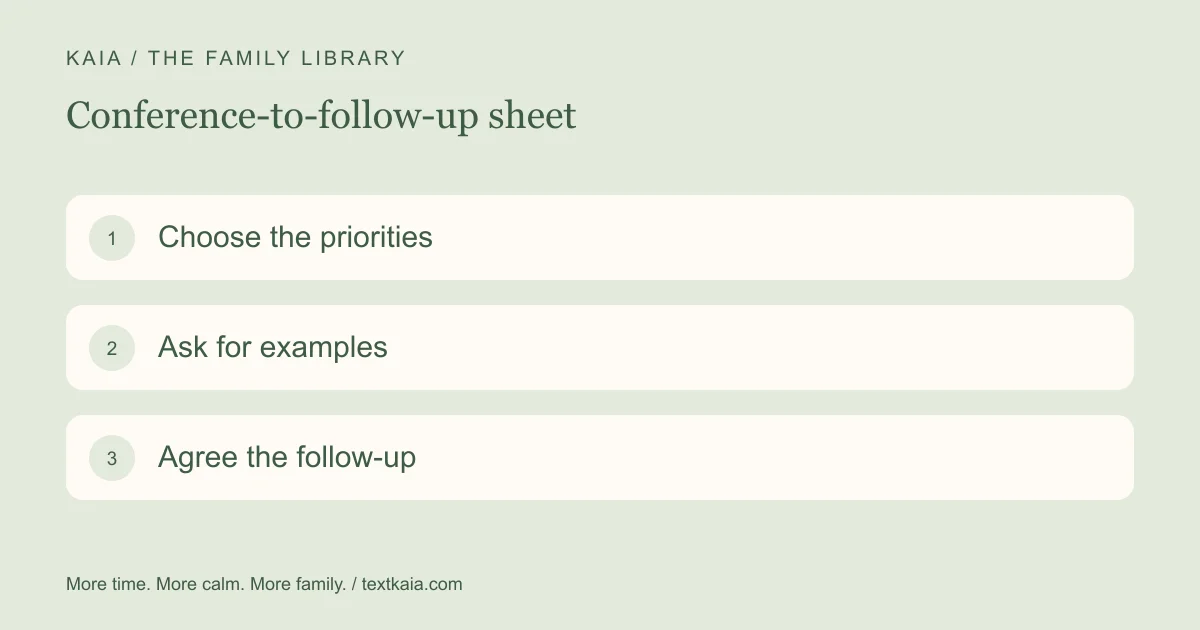
Useful parent-teacher conference questions ask how your child is learning, where they need support, how they get along with others and what to try next. Bring a few observations from home, ask for examples and finish with one or two agreed actions, named owners and a date to check progress.
The plan at a glance
Prepare for a parent-teacher conference by choosing the two or three things you most want to understand. Share a relevant observation from home and invite the teacher’s examples. Cover strengths as well as challenges, including friendships and participation.
Before leaving, repeat the agreed next steps and ask how to follow up. Record the notes somewhere the adults supporting your child can access appropriately. The aim is a useful conversation and a manageable action, rather than asking every question on a long list or trying to solve the whole school year in one appointment.
Ask about the learning you don’t see
Try: “What is my child enjoying or doing well?” “Can you show me an example?” “Where do they need more practice?” “How do you know when they’ve understood something?”
Examples make a broad answer more useful. Ask which change would matter most before collecting a large list of things to fix.
Ask about the rest of the day
Try: “How do they join in with other children?” “When do they seem comfortable asking for help?” “Are there parts of the day they find difficult?” “What have you noticed during transitions?”
Offer observations without deciding the explanation in advance. A child who is quiet at home and chatty at school may have different experiences in each setting; the conversation can help you understand them.
Agree what to do next
Try: “What could we try at home?” “What will happen at school?” “How should we tell you whether it’s helping?” “When would it be useful to check in again?”
Pick one or two actions you can carry out. Write down who does what. If a follow-up involves another specialist or school process, confirm the appropriate route with the teacher.
Make the notes useful afterward
Capture the teacher’s examples, the action and the next contact date. Share relevant notes with a co-parent or caregiver through an appropriate channel, especially if they couldn’t attend.
Talk with your child in language that fits their age. Keep the focus on support and something positive you learned. An adult planning conversation doesn’t need to turn into a child’s performance review at dinner.
A simple example
Illustrative household example. Replace it with your own details.
| Question / observation | Teacher’s example | Action / owner / review |
|---|---|---|
| Question | What is going well? | Record one example |
| Action | Read together after dinner | Adult and teacher agree details |
| Follow-up | Check how it’s going | Confirm contact and date |
Related help: Organizing school messages · Keeping school dates useful.
Questions that come up
How many questions should I take?
Choose a short priority list and keep the rest as backups. Ask the teacher how much time is available and focus on the questions that will change what you do next.
What if both parents can’t attend?
Ask the school about attendance options, then share the relevant notes and agreed actions afterward. Follow the school’s communication and information-sharing rules.
What should I write down?
Keep examples, agreed actions, owners and the follow-up route. You don’t need a transcript to remember what happens next.