Organize kids’ activities by giving each session a complete handoff: location, start and finish times, travel time, drop-off adult, pickup adult and anything to bring. Keep that plan in one shared place. When something changes, update it there and get confirmation from the adult whose job has changed.
Soccer is on the calendar.
Now: which field? Who’s driving? Are the shin guards in this house or the other one? And does “I can take them” mean pickup too?
A date and time tell you that an activity exists. A usable activity plan tells the people involved what they need to do. Here’s how to make one without spending Sunday building a spreadsheet everyone ignores.
Build an extracurricular schedule people can act on
A workable extracurricular schedule connects each session to the adults, travel and equipment it needs. Start from the club’s current information, add departure and collection times, and name drop-off and pickup separately. Confirm the adults can do their parts before treating the plan as settled.
Keep the source message with the shared schedule so changes can be checked. If practice ends early, update the event and ask the pickup adult to confirm the new time. Review the whole afternoon, including meals and downtime, before adding another commitment. The printable card below gives each of those details a place.
Start with one complete activity
Choose the session that causes the most back-and-forth. Use the club’s current schedule or message to check the details, then fill in this short card.
| Detail | Example |
|---|---|
| Activity and child | Soccer, Riley |
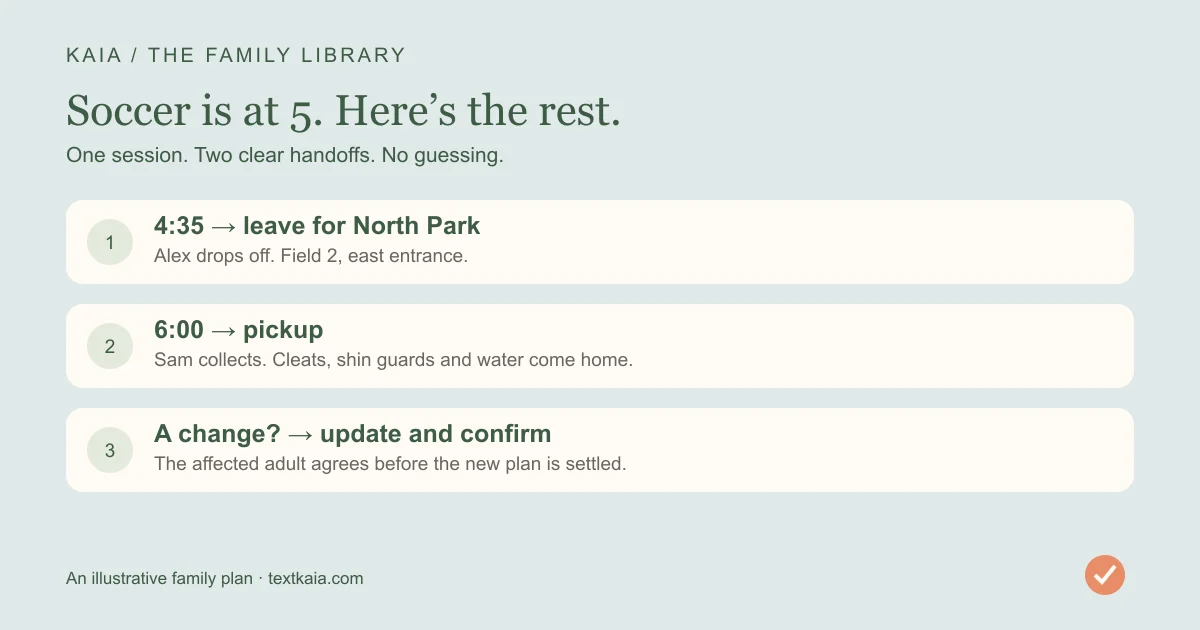
| Where | North Park, field 2, east entrance |
| Session | Tuesday, 5:00–6:00pm |
| Leave by | 4:35pm, allowing for parking and walking |
| Drop-off / pickup | Alex drops off. Sam collects at 6:00. |
| Bring | Cleats, shin guards, water |
| If the plan changes | Update the shared plan. The affected adult confirms. |
Illustrative example, not a real club timetable. Add the actual date and verify your own travel time.
Keep the club’s original message accessible too. A useful summary helps someone act; the source helps settle questions about a changed venue or cancellation.
Plan the journey as well as the session
Two activities can look perfectly compatible until you add the drive between them. Put departure time beside start time, and leave space for parking, changing shoes or finding the right entrance.
Then check the people. If one adult is collecting at 5:30 on the other side of town, they’re not also doing a 5:35 drop-off. Sort out the clash before anyone needs to leave.
Look at the rest of the afternoon too.
When will your child eat? Is there room for homework, downtime and getting home? Mississippi State University Extension’s guidance encourages families to consider the whole schedule and leave time for family life. There isn’t one right number of activities for every child.
Name drop-off and pickup separately
“Alex is doing soccer” can mean several things. “Alex drops off; Sam picks up at 6” is much harder to misunderstand.
Ask each adult to agree to their part. For carpools, confirm where the handoff happens and follow the club or school’s collection rules. Keep phone numbers somewhere the adults can access without searching a month of messages.
For two-home arrangements, add where the child is going afterward and which bag travels with them. Our co-parenting calendar guide covers the wider schedule; this card handles the particular Tuesday in front of you.
Make the gear someone’s job
A list that says “bring swimming things” is still a puzzle if only one person knows what that includes. Name the items and where they live. Let children take on parts they can manage, with an adult checking what’s appropriate for their age.
After the session, choose where the kit goes next: wet towel out, bottle emptied, shoes back by the bag. Otherwise Thursday begins with the same archaeological dig.
If the note came through school, our school-email guide helps separate the dates, replies and things to bring. Once you’ve captured the details, keep one working plan rather than several competing versions.
Close the loop when plans change
Sending a message isn’t the same as agreeing to a new pickup. Use a short update that names the change and the person who needs to respond.
“Soccer ends at 5:30 today, not 6. Sam, can you confirm you can collect at the east entrance?”
Update the calendar or shared record as well. If Sam can’t do it, agree on the replacement before treating the change as settled. A reminder can tell someone about the plan; it can’t tell you they’ve accepted responsibility.
For a recurring session, be explicit about whether the change applies just this week or every week. Keep cancellation and holiday dates visible. That one sentence can save a trip to a locked gate.
Questions that come up
What belongs in a kids’ activity schedule?
Include the child, activity, full date, location, start and finish times, departure time, drop-off and pickup adults, and equipment. Add a contact or source message for changes. Use the printable card below if you want a starting point.
How do we manage overlapping activities?
Check travel time and adult availability before committing to both. Arrange a confirmed carpool, change who does each leg, or reconsider the session. Putting two events on a calendar doesn’t create a second driver.
How many extracurriculars should a 7-year-old have?
There isn’t one number that fits every child. Consider whether the actual week leaves room for sleep, schoolwork, meals and unstructured time, and whether your child wants to keep going. Child Mind Institute’s guidance discusses finding that balance. Try a manageable commitment before adding another.
Does everyone need the same phone?
No. Kaia supports iMessage and SMS, and her shared dashboard works in a browser. For more detail, see our guide to a family calendar across iPhone and Android.
Start with the next session: fill in the card, confirm both drivers and check the bag. You can organize the rest of the season once Tuesday works.